




Ever wondered if showing up with pistols for a duel is legal today? In this article, we explain how modern law treats any duel as a very serious crime. In states like Texas, Washington, or Arizona, taking such a risky chance can lead to charges like murder (homicide) or assault. We also look at old honor challenges and compare them with today's legal rules. This post helps you see how an old practice fits into our current legal system.
Current Legality of Duels in the United States
Federal law doesn’t have a rule made just for duels. Instead, if a duel turns violent, it falls under general laws for homicide, manslaughter, or assault (homicide means killing someone unlawfully; manslaughter is a lesser form of unlawful killing), so the act is usually charged as murder or assault. Imagine two people who agree to settle a personal grudge with pistols drawn, the law treats that as a serious homicide case, not a quaint duel from history.
Texas got rid of its anti-duel law way back in 1876. Even though there isn’t a special rule against dueling anymore, if things go wrong and someone gets hurt or dies, those involved can still face tough criminal charges under Texas law. Picture a scenario where two individuals meet over a personal slight; even without a specific duel ban, their actions would likely be scrutinized under homicide statutes.
Washington takes a similar approach. The state’s laws don’t mention duels by name, so any lethal challenge is handled using usual homicide or assault charges. Think of a modern duel where both parties willingly take a dangerous risk, the outcome in the eyes of the law would be the same if someone is injured or killed.
Arizona follows along in the same way. There’s no duel-specific language in its laws, so any deadly encounter that might look like a duel is treated as a regular violent crime. In some states, explicit bans in the penal codes may also bring civil lawsuits for wrongful death or battery (battery means harmful physical contact), highlighting that even if there isn’t a duel law, the legal consequences are still severe.
Overall, across the United States, most jurisdictions view a duel as another kind of criminal act rather than a unique offense. This means that no matter how nostalgic dueling might seem, trying to bring it back today would face the full force of modern criminal law.
Historical Evolution of Duel Laws and Honor Challenges in America

In 1646, New France saw its first recorded duel. Back then, military officers would settle personal disputes with swords to prove their honor and bravery. Imagine a soldier standing at dawn with a sword in hand, ready to settle a private matter with one decisive strike. This early form of dueling set the stage for a long history of honor challenges that were both traditional and legally managed.
During the revolutionary era, states began to step in and put limits on these dangerous clashes. For instance, New York’s 1777 charter clearly banned dueling as a way to resolve disputes about personal honor. This rule was meant to protect citizens by discouraging violent confrontations, even if they were based on long-held customs.
In the 1800s, several states, including New Hampshire, New Jersey, North Carolina, South Carolina, and South Dakota, started to impose harsh penalties on duel participants. Sometimes, duelists faced death sentences, while officers and gentlemen might receive steep fines or be reassigned in the military. Think about it: imagine a fine so heavy it could damage your reputation or even a complete change in your work because of one duel gone wrong. These strict measures showed that society was moving away from accepting personal combat as a normal way to settle disputes.
By the mid-1800s, changes ingrained in the Constitution began to take over from standalone laws in stopping deadly duels. The legal landscape had clearly shifted, marking the end of an old custom and the beginning of an era where honor challenges were no longer legally acceptable.
Judicial Interpretations and Landmark Duel Cases
U.S. courts hardly ever accept honor as a defense. When a duel turns deadly, judges treat it as murder or manslaughter without any special break. Even if someone claims they were defending their honor, that claim won’t protect them from criminal charges. For example, think about Canada’s last fatal duel in May 1838, when Captain Robert Sweeny shot Major Henry Warde in a boiling dispute. Then and now, judges make it clear: you can’t use honor to justify killing someone. Imagine arguing, “I was defending my honor,” only to hear a judge say, “Sorry, but honor doesn’t give you a free pass.”
Court decisions about these challenges have shaped how duels are viewed in Canada and the United States. In Canada, a 2018 law change moved duels under general violence rules instead of treating them as a separate crime. This shows how changes in the law can reshape what judges decide.
State courts have also tightened their view on mutual combat. Even if both people agree to fight, they are held fully responsible for their actions. Judges now check every detail, leaving little room to lean on old ideas of honor. In today’s legal system, defending personal honor just doesn’t cut it.
Penalties and Civil Liability for Organizing Duels

Organizers have a unique responsibility compared to duel participants. They don’t just set up the event, they must also ensure the match is safe. If safety protocols aren’t followed, an organizer could be held liable for wrongful death or battery (battery means harmful physical contact).
Those who duel might face criminal charges for their actions. But organizers are often blamed for not taking the necessary precautions to avoid harm, which can lead to lawsuits over negligence.
Imagine planning a live show, where every detail matters. If you overlook even one safety step, you could end up facing serious claims for negligence and other civil penalties.
Comparing Duels to Modern Dispute Resolution Methods
Back in the day, duels were risky business, often ending in tragedy. Today, we’ve moved away from those dangerous practices towards methods that keep people safe. Instead of settling a personal grudge with a potentially deadly duel, folks can now choose regulated sports like boxing, think of a match where officials make sure everyone follows the same rules.
Modern methods for handling disputes lean on conversations rather than combat. Options like arbitration (a process where a neutral person makes a decision), mediation, or restorative justice are all about talking things through, not fighting them out. Picture two people sitting down with a fair third party, piecing together a solution as if they were putting together a puzzle.
Some smart legal minds are even discussing the idea of legal, honor-based contests that follow strict safety guidelines, kind of like martial arts tournaments. This shows just how our thinking has changed. We now value structures that keep everyone safe over dangerous old traditions.
Global Perspectives on Duel Legality: Canada and the United Kingdom
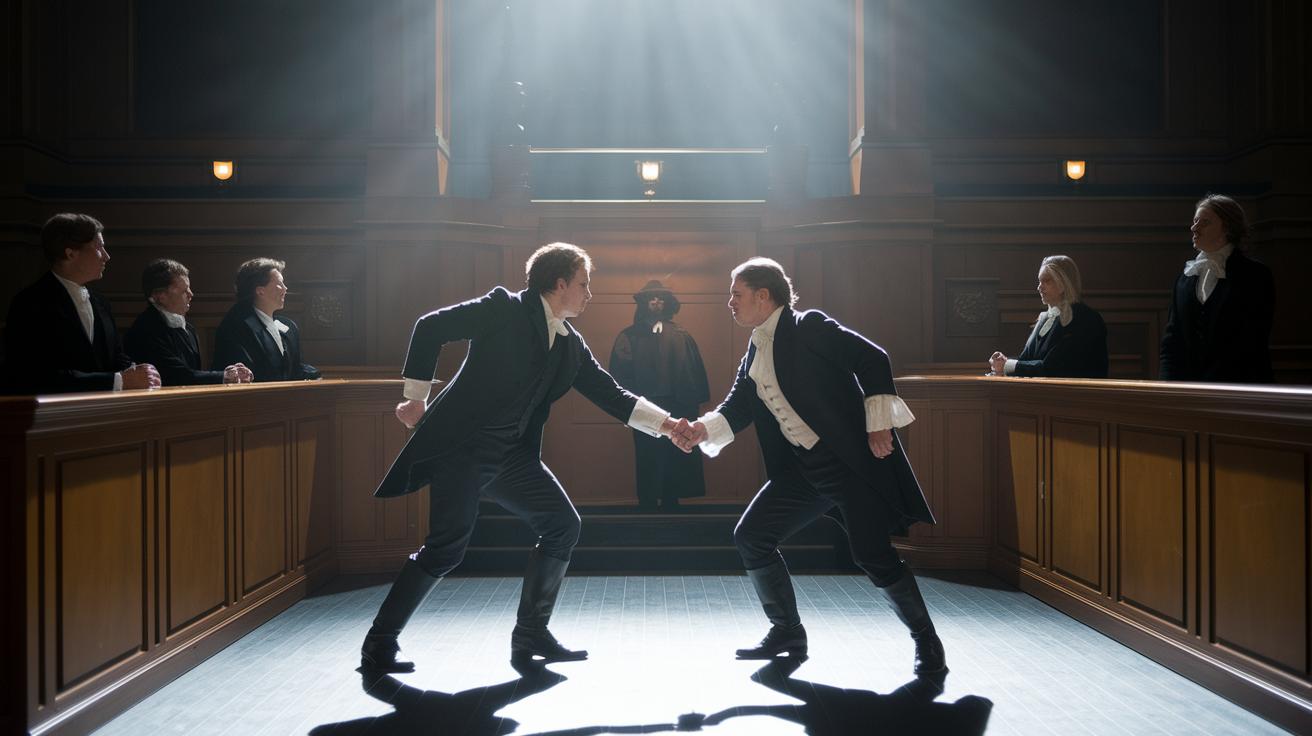
Canada made a big change in 2018. Its Criminal Code was updated so that dueling isn’t a crime on its own anymore. Today, if two people get into a violent fight, they face charges like homicide (killing unlawfully), manslaughter (lesser unlawful killing), or assault. This new rule means that personal combat is treated just like any other violent crime. Picture an old duel being judged by modern legal rules.
Over in the United Kingdom, a special law for duels was never created. The last duels there happened in the 1800s. If something today looks like a duel, it’s handled as homicide under common law. This approach comes from the belief that old codes of chivalry, once seen as tests of honor, don’t belong in modern legal practice. Even long ago, French laws banned duels after their Revolution, and Italian codes from the 12th century did the same.
When you compare the two, it’s clear that both Canada and the U.K. have moved away from outdated fighting traditions. Today, standard legal rules deal with violent acts, making sure that personal disputes aren’t turned into accepted challenges. In short, these changes show a shared commitment to reducing unnecessary violence around the world.
Final Words
In the action, we explored how legal challenges around duels evolved, from state-specific restrictions to modern interpretations under criminal law. We looked at historical shifts, key case studies, and how penalties and civil liability still shape debates today. The discussion also compared traditional dueling with alternative dispute methods and reviewed perspectives from both Canada and the United Kingdom. All in all, there’s clarity on how current systems judge challenges and whether duels legal remain a topic of legal interest.
FAQ
Is dueling legal in Texas?
The legal status of dueling in Texas means there’s no specific duel ban, but using a gun in a duel can lead to homicide or assault charges under general criminal law.
Are duels legal in the US and USA?
American law does not treat dueling as legal; lethal challenges are prosecuted under charges like murder, manslaughter, or assault, making duels an unenforceable custom today.
Are duels legal in Ohio and New Jersey?
In states like Ohio and New Jersey, there is no legal protection for dueling; participants can face prosecution under standard violent crime statutes, as dueling is not recognized as lawful.
Where is it legal to duel to the death?
No state authorizes dueling to the death; any lethal challenge is handled as a homicide or assault case under existing criminal laws.
Was dueling legal in the 1800s and when was it outlawed?
In the 1800s, dueling was commonly practiced until evolving legal reforms gradually restricted it, eventually leading to clear prohibitions against lethal honor challenges.
When was the last legal duel?
The last recognized legal duel occurred in the 1800s as evolving views on personal combat and refined criminal statutes ended the era of lawful dueling.
What states still allow duels?
While a few states do not have explicit duel bans, any duel is prosecuted under general homicide or assault law, effectively preventing dueling as a legal practice.