



Ever wonder how a legal system from nearly a thousand years ago still shapes today’s courts? The British legal system grew gradually, laying down the blueprint for modern common law (law built from judges' decisions). Think of it as a step-by-step guide that has helped judges and lawyers for generations.
It all started with kings and early trial methods. Sure, many things have changed, but its core ideas of fairness and clear rules still stand strong. Let’s explore how history and tradition continue to shape our courts and legal practices today.
British legal system: A Remarkable Outlook
Over 900 years ago, after the Norman Conquest of 1066, the British legal system began to take shape. Back then, each new development added a piece to a puzzle that still forms today’s foundation. King Henry II’s work in the 1200s helped centralize what we now call common law (law developed from judges' decisions). It’s like the original blueprint that still guides modern courtrooms. If you’re curious about the roots of our legal traditions, you might enjoy learning more about how modern legal practices came to be.
The system covers many areas, kind of like a well-stocked toolbox. There’s Contract Law, Tort Law (this means civil wrongs causing harm), Criminal Law, Equity & Trusts, EU Law, Civil Litigation, and Land Law. Each of these areas tackles its own challenges, whether it’s dealing with business deals, disputes over property, or even crimes. Think of it like having the right tool for every job, so that both people and businesses find help when they need it.
At its core, British justice is all about fairness, steady rules, and a respect for the past that still holds strong today. The legal norms have grown gradually, step by step, which lets the system meet new challenges while staying true to its history. This mix of old and new makes the British legal system a keeper of tradition that’s also ready to handle today’s complex legal issues.
Historical Development of English Law
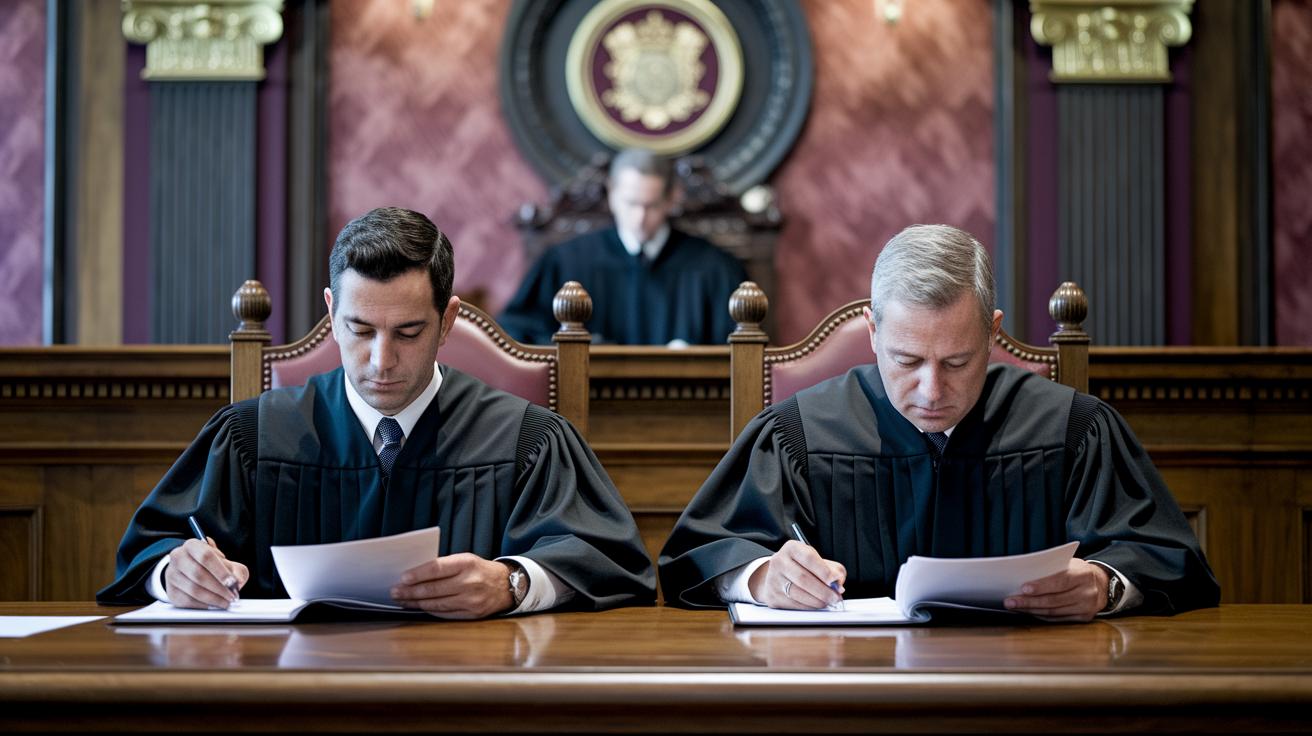
The history of English law is full of big changes that affect how justice works today. Long ago, people used trial by ordeal (dangerous tests to show guilt or innocence) to decide cases. Later, groups known as justices in Eyre brought some order to the system. The King’s Bench started as a team from the Royal Household handling complaints. Over time, it broke into separate courts, the King’s Court, the King’s Bench, and the Court of Exchequer, each helping to shape the law in its own way.
In 1285, Edward I introduced Magistrates’ Courts to handle everyday crimes. Today, these courts manage nearly 95 out of every 100 criminal cases, showing how important they are to daily justice. After the hard times following the Restoration (the return of the monarchy), a clearer line formed between judges and the King. This change set the stage for the rise of the Court of Chancery. Later in the 1800s, reforms, like ending the Court of Great Sessions in 1830 and starting the Old Bailey, brought more modern ideas into the system. Today, about 70 Crown Court centres handle the most serious cases, a sign of centuries of careful improvement.
Below are six key milestones in English legal history:
| Year | Milestone |
|---|---|
| 1066 | Norman Conquest and royal justice |
| 1200s | Henry II centralizes common law |
| 1285 | Establishment of Magistrates’ Courts |
| 1600s | Post-Restoration judicial reforms |
| 1830 | Abolition of Court of Great Sessions |
| Present | Seventy Crown Court centres |
Each of these milestones marks a turning point in how English law was built. They remind us that the legal system we see today grew gradually, piece by piece, much like carefully laying stones to build a strong, lasting bridge from the past to the present.
Structure and Hierarchy of UK Judicial Institutions
The UK's court system is set up like a ladder, with each court playing a special role in handling different kinds of cases. For example, Magistrates' Courts take care of about 95% of criminal matters, handling everyday issues and less serious crimes. The Crown Court, which operates from seventy centers, steps in for tougher criminal cases that need extra attention. The High Court is split into three parts – the Queen's Bench, Chancery, and Family divisions – to manage civil disputes and more complicated cases in an orderly way. Plus, Scottish Sheriff Courts and Northern Ireland’s civil and family courts work to meet regional needs while still being part of the national justice system.
As cases progress and grow more complex, they often move up to the Court of Appeal, which reviews decisions made by both the High Court and the Crown Court. If you're looking into a legal appeal (an official process to challenge a decision), this stage is key. At the very top, the Supreme Court is the final stop for appeals in the UK, and its decisions set the rules for the whole system.
| Court | Jurisdiction | Key Function |
|---|---|---|
| Magistrates’ Court | Local areas | Manages about 95% of criminal cases |
| Crown Court | Regional centers | Handles serious criminal offenses |
| High Court | Nationwide | Deals with complex civil cases |
| Court of Appeal | Nationwide | Reviews decisions from the High and Crown Courts |
| Supreme Court | UK-wide | Serves as the final appellate body |
Roles of Legal Professionals in the British Legal System

Solicitors are the friendly first stop for anyone needing legal help. They take in client details, get all of the documents in order, offer guidance, and set up cases step by step. They work side by side with clients to gather every vital detail and make sure every paper is perfect before a case goes to court. To qualify, a solicitor completes the Legal Practice Course (LPC, a course that teaches practical law) and then a two-year training contract. They work under the watchful eye of the Law Society. Imagine a solicitor sitting down with you, reviewing each document carefully because every detail matters.
Barristers, on the other hand, are the experts who take a case into higher courts and argue before judges. They use their deep understanding of legal rules to build clear and convincing arguments. They usually work in chambers, where teamwork and specialization in court work go hand in hand. Their path starts with the Bar Professional Training Course (BPTC) and a one-year pupillage (a period of supervised learning). They are regulated by the Bar Standards Board. Picture a barrister confidently presenting their case in the courtroom, speaking clearly and calmly as they make their point.
Senior clerks play a key role behind the scenes, keeping everything running smoothly. They handle the administrative and business tasks within barristers’ chambers, from scheduling court dates to managing finances. Their work is like the engine that allows barristers to focus on arguing cases. Together, solicitors, barristers, and senior clerks form a strong teamwork structure that makes sure the British legal system works efficiently and reliably.
Courtroom Traditions and Attire in British Courts
Modern British courtrooms still stick to time-tested dress codes that show respect for the law. Judges wear full-bottomed wigs that add a formal touch and remind everyone of fairness and impartiality. In higher courts, barristers and solicitors wear bench wigs as a mark of the serious legal process, much like different uniforms signal a special role in a team. Picture a courtroom where the judge’s wig instantly sets a tone of authority and care.
Yet, the debate over modernizing these traditions is alive. Some folks feel that updating courtroom attire could make the legal process seem friendlier while still honoring history. Others believe these age-old symbols are key to the lasting nature of justice. Scottish and Northern Irish courts have their own unique dress customs too, showing that every region keeps its special legal heritage.
In short, blending tradition with hints of modernity shows why ceremonial dress continues to be a vital part of British legal culture.
Modern Reforms Transforming the British Legal System

Back in 1998, the Civil Procedure Rules changed the game in the British legal system. They set up a clear way to manage cases and introduced digital filing and e-bundles. It’s like switching from a messy stack of papers to a neat digital spreadsheet, everything became simpler and quicker to access.
Alternative dispute resolution (ADR (methods like mediation and arbitration used to settle disputes outside of court)) has also taken center stage in many civil claims. By offering these options, parties can sort out their issues without the full stress of a trial. It’s a bit like having a neutral friend help guide a tough conversation, making the whole process feel more relaxed and less overwhelming.
Since 2020, remote hearings have become common practice in courts. With digital platforms handling cases online, everyone can join hearings from different locations. Picture logging onto a video call to join a court session, it cuts down on delays and makes justice more accessible. This shift highlights how technology now plays a big role in our modern legal processes.
Comparative Analysis of British and American Legal Systems
Both Britain and America come from a common law background that started in the Middle Ages. But they’ve built their systems in very different ways. In the UK, laws developed over many years without one single written constitution. Instead, they lean on old traditions and gradual updates. In the US, the 1787 Constitution clearly sets out basic rights and how the government should work, giving legal processes a straightforward path, while Britain builds its system on past court decisions and evolving statutes.
These differences also show up in how courtrooms work and how legal professionals do their jobs. In the UK, it’s rare to see civil juries because judges usually make the decisions. Over in America, civil cases often use juries, which lets community views help shape the outcome. Plus, British law divides work between solicitors and barristers, each handling different tasks, while US attorneys take care of both roles. Lastly, the makeup of top courts is different too. UK Supreme Court judges often come from a background as Law Lords, tying them to a long legal tradition. In the US, Supreme Court justices serve for life, which means they help steer legal interpretation for many years.
Landmark Judgments Shaping British Legal Precedents

Donoghue v Stevenson in 1932 changed how we see negligence by introducing a modern duty of care. In that case, a woman got sick after drinking a beverage contaminated by a rotten snail. The decision made it plain that companies must ensure their products are safe, just like a baker has to make sure every loaf is fit to eat.
Then there’s Entick v Carrington from 1765. This ruling set a clear rule against government overreach, saying that any action by the state needs proper legal backing. Both of these cases serve as strong pillars in law, reminding us that simple rules protect individual rights. They push courts to always think about fairness and accountability, so we don’t repeat past mistakes.
R v Woolmington in 1935 drove home the idea that a person is innocent until proven guilty, a principle that still lights the way in British courts today. In this case, the court made it clear that the prosecution must prove guilt, just as it’s unfair to expect someone to prove they haven’t done something wrong.
Finally, Miller v Secretary of State for Exiting the European Union in 2017 checked old royal powers by insisting even long-standing traditions must stand up to modern oversight. Together, these cases lay down clear guidelines that judges follow. They show how blending old rules with new standards helps build a legal system that is both flexible and steady.
Mechanisms for Access to Justice in the British Legal System
If you need legal help in the United Kingdom, there are several ways to get support. The Legal Aid Act of 1949 started the idea of state-funded legal help, though now means-testing (checking your income) can limit who qualifies. But don’t worry, if you don’t qualify, there are still other options available.
These days, many people turn to mediation or arbitration to solve disputes without a full court case. Mediation lets you talk through problems in a friendly setting, while arbitration relies on a neutral person to make a binding decision. Both methods can save you time, cut costs, and reduce stress. Then there are specialized tribunals that focus on issues like employment, social security, and immigration, offering tailored hearings for different legal matters. And if a case is very complex, the Upper Tribunal steps in to review decisions and ensure fairness.
Every option here is designed to help you find the right kind of legal advice quickly and easily. Whether Legal Aid works for you or you choose mediation for a family dispute, these paths lighten the load on our courts and speed up resolutions.
| Mechanism | Purpose | Typical Cases |
|---|---|---|
| Legal Aid | State-funded legal help | Criminal and civil cases needing support |
| Mediation | Informal dispute solving | Family, contract, and employment conflicts |
| Arbitration | Neutral decision-making | Commercial and construction disputes |
| Tribunals | Specialized hearings on specific matters | Employment, social security, immigration cases |
Think of each option as a helpful tool in your legal toolbox, each one set up to meet a different need. Whether you're stepping into mediation or heading to a specialized tribunal, these approaches are all about making your journey through the legal system smoother and faster.
Future Outlook for the British Legal System

The British legal system is in a big period of change as it finds its way in a post-Brexit world. Lawmakers are replacing old EU rules with new ones that fit our local needs, kind of like swapping out an old map for a clearer, local guide. Digital court services are growing fast, which should help cut down on delays – imagine switching from snail mail to a quick text message. And with Scotland and Wales now having more power to create their own rules, local problems can get solved in a more targeted way.
Still, not everything is smooth. Many worry about keeping the courts fair and independent, especially with funding cuts that might put extra strain on the system. Ideas to lower the costs of civil cases (disputes between people or organizations) are on the table, which could ease the money worries for everyone involved. Plus, there’s a big push to make sure legal help is available to all citizens. In the next few years, we’ll see if these changes can both modernize the system and hold on to the key values that have always stood for British justice.
Final Words
In the action, we explored the rich history and structure of the british legal system, tracing its medieval roots and groundbreaking reforms. We looked at the roles of solicitors, barristers, and clerks, and compared distinct judicial frameworks. The blog post highlighted key milestones, modern procedural changes, and innovative digital strategies. Every detail builds a clearer picture of both tradition and transformation. Stay inspired and confident as you apply these insights in your legal practice.
FAQ
What are the sources of English law?
The sources of English law include judge-made rules, laws passed by Parliament, EU legislation influencing transitional periods, and long-standing local practices that work together to shape the legal framework.
What defines the British common law system?
The British common law system develops from court decisions and long-held legal traditions. Its history is built on past judgements that guide modern rulings and maintain consistency across many legal issues.
How did the English legal system develop and when was it established?
The English legal system was established after the Norman Conquest in 1066 and evolved through centuries of royal courts and reforms, ultimately forming the modern practices seen today.
What is the UK legal system?
The UK legal system is the structure through which laws are created and enforced. It combines common law, parliamentary statutes, and judicial decisions to provide fairness across various courts.
How is the British legal system different from the United States?
The British system does not have a single written constitution and splits legal roles into solicitors and barristers, whereas the U.S. uses a codified Constitution and often combines legal functions under one office.
How good is the British legal system?
The British legal system is regarded for its clear structure and rich history. It mixes longstanding traditions with modern reforms to offer reliable guidance through established legal principles.
Where can I study the English legal system?
Courses on the English legal system cover its history, key laws, and court structures. They provide practical insights into how law is practiced in Britain, helping learners build a solid foundation.