



Have you ever wondered how one written order can shape our freedoms? A writ is simply a written order from a judge, telling someone to do or stop doing something to protect our rights.
Think of it as a building block for our laws, holding everyone accountable and making sure rules are followed step by step. In our discussion, we break down what a writ means, its key parts, and the different kinds you might encounter.
Read on to see how these legal orders act as a strong check on authority, keeping our system fair and open.
Understanding the Writ in Law: Definition and Core Elements
A writ in law is a formal written order from a court or judge (a person with legal authority) telling someone to do something or to stop doing something. It isn’t just a piece of regular paperwork, it’s a powerful tool the courts use to enforce decisions and protect our rights.
Take the writ of habeas corpus, for example. This writ is a legal safeguard used when someone is held without proper reason, ensuring that their detention is reviewed quickly. It shows step by step how the writ makes sure that rights are respected and proper legal procedures are followed.
Every writ acts as a clear command from the court, holding people accountable for their actions. Whether in civil matters or criminal cases, writs help keep the legal process organized and fair. In short, knowing what a writ means and how it works helps us see how our legal system protects and balances our rights.
Exploring Major Types of Legal Writs in Law
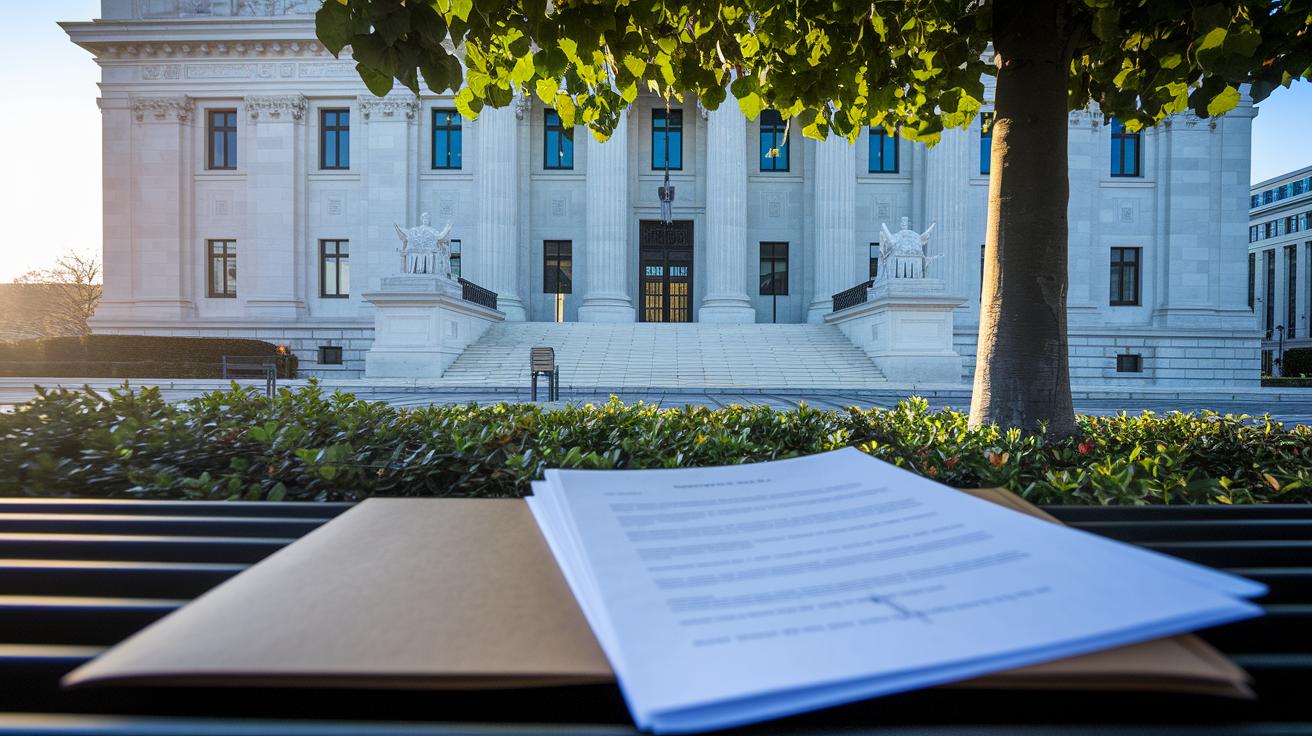
Writs in law are formal orders that serve different purposes. One common writ is habeas corpus (a legal tool to challenge illegal detention). Imagine someone held without clear evidence, this writ makes sure a judge quickly checks if the detention is lawful, protecting personal freedom.
Another key writ is mandamus. This order directs a government official to perform a duty they are required to do. Think of a public official who refuses to act on a clear legal duty; mandamus steps in to enforce accountability and remind everyone to follow the law.
Next, there’s the writ of certiorari. Higher courts use this writ to review decisions made by lower courts. It’s like a safety net that helps correct mistakes and keep legal decisions consistent. Picture a lower court ruling with major consequences, the writ of certiorari brings that case to the highest court for a closer look.
There is also the writ of prohibition. This writ stops lower courts from exceeding their legal powers and ensures that each court stays within its set limits.
Finally, a writ petition is the formal request made to start any of these writs. Here, the petitioner files an application with the court, which then promptly sends legal documents to inform the other party.
writ meaning in law: Clear Legal Insight
Writ in law has changed a lot over the years. Back in medieval England, writs started as orders from the king telling people to do or not do something. Those early royal orders set the stage for today's writs, giving a clear way to guide behavior in early legal systems.
As time went on, writs shifted from private commands by a ruler to official legal tools accepted everywhere. This change influenced courts in the United States, Canada, and Australia, where traditional writs were standardized for fairness. For example, habeas corpus (a legal process that lets someone challenge unlawful detention) remains an important writ today. Outdated writ forms have since been replaced by modern procedures that work better in our current legal system.
In short, the meaning of writs today reflects a journey from royal orders to a refined tool that ensures fairness and accountability in our courts.
Procedural Guide to Filing a Writ in the Legal System

Filing a writ begins with a petition that clearly explains why you’re asking for help. Start by writing your petition to show the facts of your case and the specific legal mistake or duty involved. You might find it helpful to look at guides on drafting legal documents for practical tips.
Once your petition is ready, the next step is to submit it to the court clerk’s office. How you file can change depending on whether your case is in state or federal court. For federal cases, if you’re asking for a writ like mandamus (a request for a judge to order a government official to do something) or prohibition (a request to stop a court from hearing a case), you follow Rules 20–23 of the Federal Rules of Appellate Procedure. On the other hand, if you’re filing a habeas corpus petition (a legal action to challenge unlawful detention), you’d use the guidelines in 28 U.S.C. § 2241.
After filing, you need to serve the petition to everyone involved. This means you officially notify the respondents about your action. Serving the petition is key to keeping the process fair and clear. The method you use will depend on the rules set by your court.
Different courts have their own rules too. Some state courts stick closely to deadlines and require specific forms, while federal procedures tend to be more uniform. Processing times can be as quick as a few days for emergency cases or take several months if the matter isn’t urgent.
As you wait for the court’s decision, keep track of any letters or updates about filing rules. Staying organized is important because every little detail can make a difference in your case.
Landmark Writ Cases and Real-World Examples in Law
During the Civil War, President Lincoln took the bold step of suspending habeas corpus in Ex parte Merryman. This move showed how a writ, a legal order that demands a speedy check on someone's detention, can protect civil rights in tough times. Imagine someone held without a proper reason, and then a writ comes in to force a quick review; that's habeas corpus in action. Even in a crisis, our legal safety nets still matter.
In the famous Marbury v. Madison case, the Court used a writ of mandamus (a court order that tells a government official to perform a duty) to establish judicial review. Think of it like a referee making sure everyone follows the game rules. This decision reshaped constitutional law by making it clear that no one, not even top officials, is above the law.
The Supreme Court also uses the writ of certiorari to keep an eye on and fix mistakes made by lower courts. In fact, they only accept less than 1 percent of over 7,000 petitions each year, like a filter that only catches the most important issues.
Writs work in many other areas too. For example, habeas corpus has been key in overturning wrongful convictions, especially in DNA exoneration cases. And when someone thinks a lower court has overstepped its bounds, they file a writ petition, a formal request to the court, to trigger a review that protects individual rights.
Comparative Perspective: Writs in U.S. vs. U.K. Judicial Systems

In the U.S., writs rest on the Constitution and federal laws. For example, habeas corpus (a legal action to prevent unlawful detention) is clearly set out in 28 U.S.C. § 2241. American writs act like a safety net, they help higher courts step in quickly. Think of a writ of certiorari (an order for a higher court to review a lower court's decision) as a way to make sure mistakes are fixed fast.
In the U.K., things work a bit differently. Traditional writs such as mandamus (an order to perform a duty) and prohibition (an order to stop a lower court from acting) are still used today under the Senior Courts Act 1981. Here, writs are tied to long-standing legal traditions but have adapted to modern procedures. The focus is on careful, formal steps and judicial restraint, which makes the U.K. approach quite different from the more flexible American style.
Final Words
In the action, we broke down a writ’s nature as a clear, formal legal order with real-life examples. The blog post walked you through its core elements, types, and history, while outlining how to file one. We also compared its use in different systems. This discussion strengthens your grasp on writ meaning in law, offering clear insights for practical application. Overall, these insights boost understanding and encourage informed discussion in legal practice.
FAQ
What is the definition of a writ?
The writ is a formal written order from a court that directs a person to act or refrain from acting. It is used to enforce court decisions and protect individual rights.
What does a writ mean in jail?
The writ used in jail settings often refers to orders such as habeas corpus, which challenge unlawful detention by requiring a court to examine the legality of an inmate’s imprisonment.
What is a writ of habeas corpus, and can you give an example?
The writ of habeas corpus challenges detention by forcing a court review of an inmate’s legal status. A classic example is its use to contest unlawful imprisonment during historical conflicts.
What does writ charge mean or what is a charge writ?
A writ charge refers to a formal legal order that addresses a specific criminal or administrative charge. It notifies the involved party of the need to answer to a legal action.
What does writ petition mean and how is it served?
A writ petition is a formal request submitted to the court asking it to issue a judicial order. It is normally served on respondents through established legal procedures to start the process.
What is a writ of certiorari and a writ of mandamus?
The writ of certiorari urges a higher court to review a decision of a lower court, while the writ of mandamus orders a government official to carry out a duty they are legally bound to perform.
What does writ mean in Urdu?
In Urdu, the term for writ is “تحریری حکم,” which means a formal and written court order directing an action or restraint in legal matters.
What does it mean to be served with a writ?
Being served with a writ means receiving formal notice that requires you to act or refrain from acting as specified by a court order. This ensures a clear legal process is followed.
Is a writ the same as a subpoena?
A writ and a subpoena are different legal instruments. A writ is a broad court order for specific actions, while a subpoena is a command to appear in court or produce documents.