


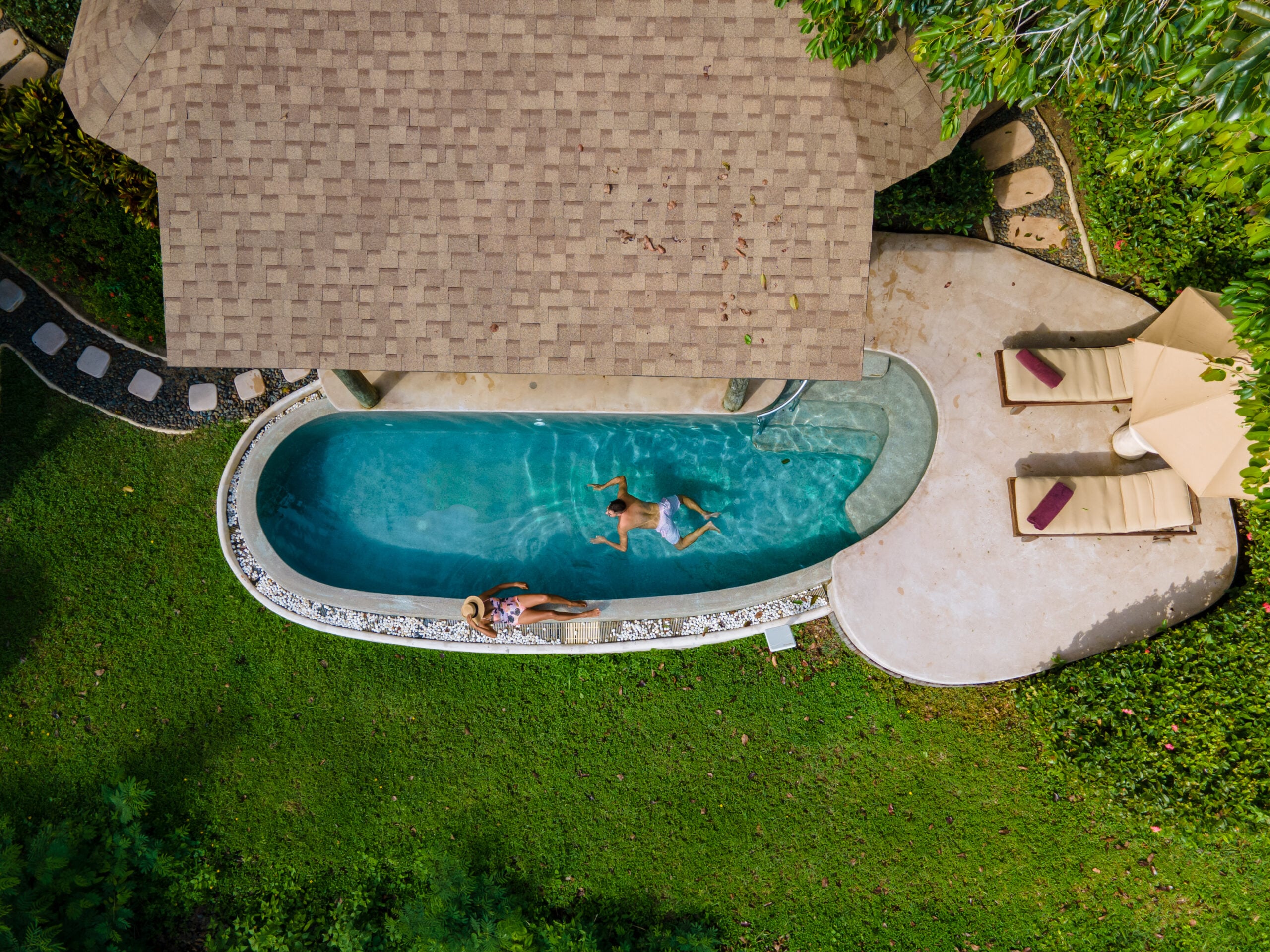
The pool deck is the backbone of your entire backyard experience. Long before anyone dives into the water, they’re walking, lounging, and gathering on the surface surrounding it. If you’re planning a new pool build, choosing the right decking material deserves just as much attention as the pool itself. The three most popular options—concrete, travertine, and pavers—each bring distinct advantages to the table, and understanding their differences will help you make a choice that suits your style, budget, and long-term maintenance preferences.
Concrete: The Versatile Classic
Concrete remains a go-to choice for pool decks because of its flexibility and affordability. Poured concrete can be stamped, stained, or textured to mimic the look of natural stone, wood, or tile at a fraction of the cost. This makes it an appealing option for homeowners who want a custom aesthetic without the higher price tag of premium materials.
Beyond looks, concrete offers a seamless surface that’s easy to clean and simple to repair if cracks or chips appear over time. Many pool builders also apply cool-deck coatings, which help reduce surface heat—a valuable feature for anyone who plans to walk barefoot across the deck on sunny afternoons. The main tradeoff is that concrete can develop cracks as the ground shifts, and while patch jobs are usually straightforward, the color and texture may not always match perfectly.
Travertine: Natural Elegance That Stays Cool
Travertine has become one of the most sought-after materials for pool decks, and it’s easy to see why. This natural stone offers a timeless, upscale look with soft, earthy tones that complement nearly any landscape design. Because it’s naturally porous, travertine stays cooler underfoot than concrete or many paver options, making it a comfortable choice for pool areas that see a lot of direct sunlight.
Travertine also has excellent slip resistance, which adds a layer of safety around wet surfaces. Each paver has natural variations in color and texture, giving your pool deck a one-of-a-kind appearance that manufactured materials can’t fully replicate. On the maintenance side, travertine does require periodic sealing to protect against staining and erosion, and it tends to sit at a higher price point than concrete. For homeowners focused on long-term curb appeal and comfort, though, many find the investment worthwhile.
Pavers: Durable and Endlessly Customizable
Pavers—whether made from concrete, brick, or natural stone—offer a modular approach to pool deck design. Because they’re installed piece by piece, pavers allow for intricate patterns, borders, and color combinations that are difficult to achieve with a single poured surface. This flexibility makes pavers a favorite among homeowners who want a distinctive, personalized look.
One of the biggest practical advantages of pavers is repairability. If one paver cracks or becomes stained beyond cleaning, it can be individually removed and replaced without disturbing the rest of the deck. This modularity also helps pavers handle ground movement better than solid poured surfaces, since individual units can shift slightly without causing widespread cracking. On the maintenance side, weeds or ants can sometimes work their way into the joints between pavers, so periodic joint sand replenishment and sealing help keep the surface looking its best.
Balancing Pool Maintenance with Deck Material
When planning a new pool, it’s worth thinking about how your deck material interacts with ongoing pool maintenance. Splashed water, pool chemicals, and constant foot traffic all take a toll on decking surfaces over time. Concrete’s smooth, sealed surface makes it simple to hose down and treat with sealants that resist chemical staining. Travertine’s natural composition handles chlorine exposure well, though its porous nature means sealing should be part of your regular maintenance routine. Pavers offer the advantage of easy spot repairs, so a stained or damaged section never means redoing the entire deck.
Choosing the Right Fit for Your Backyard
There’s no universal answer when it comes to picking the ideal pool deck material—it comes down to your budget, aesthetic preferences, and how much maintenance you’re willing to take on. Concrete offers affordability and versatility, travertine brings natural beauty and cooling comfort, and pavers provide durability with unmatched design flexibility. Whichever direction you choose, investing time in this decision during your pool build will pay off for years of backyard enjoyment to come.