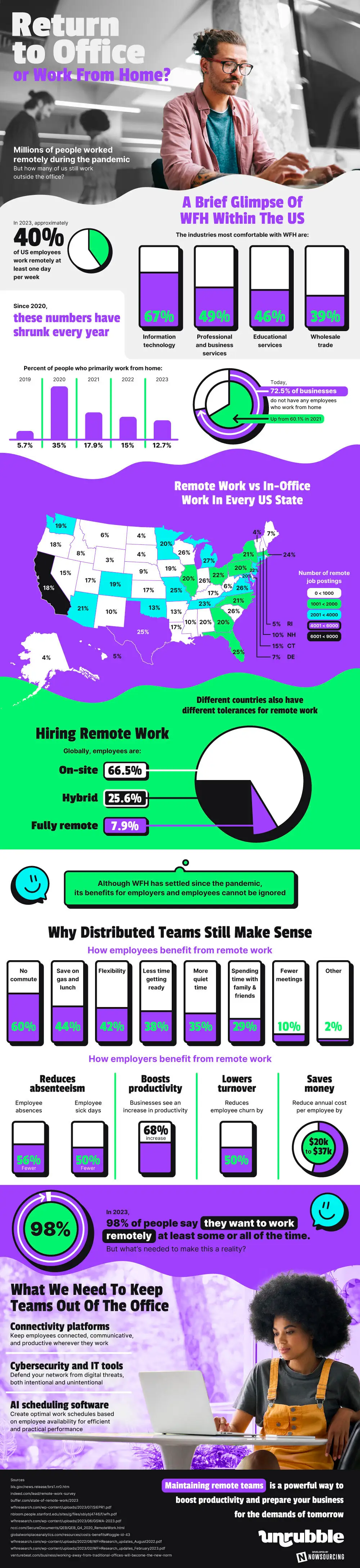




The typical American workday has changed significantly in the last several decades. It used to be significantly longer due to the cumbersome commutes that employees had to take to get from their suburban homes to the office. This workplace structure has changed as a result of technological improvements that facilitate the ability to complete virtual work. There has been a dramatic increase in workers that work from home at least one day a week, standing at around 40%. 12.7% of workers work exclusively from home. WFH is not as prevalent as it was during the COVID-19 pandemic a few years ago, but it is slowly gaining headway across the United States.
Some industries have been more receptive to remote work than others. Information technology, professional and business services, educational services, and wholesale trade have adopted it at the highest rates. Their employees appreciate the ability to spend more time with their loved ones and to save time and gas by removing their commutes from their daily schedules. Businesses are also benefiting from the reduced sick days, absenteeism, and turnover from their employees. Another huge plus is that companies are experiencing a significant 68% in productivity. It is anticipated that as technology advances and remote work becomes even more accepted, workplaces will become even more virtual.