


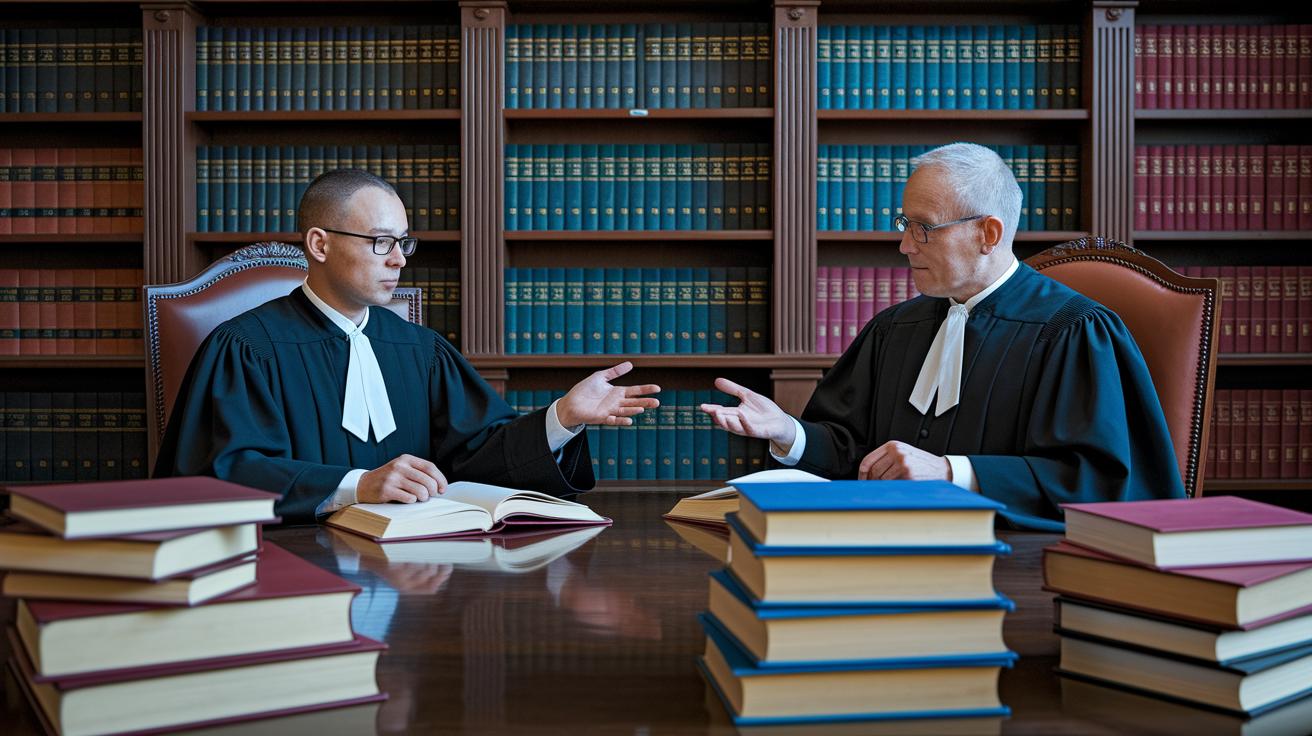
Have you ever wondered how judges' ideas have developed over the years? The core rules of law (legal doctrines, which are the basic principles that guide court decisions) form the strong foundation of our courts. They work like a trusted recipe for fairness, guiding each case step by step.
These doctrines shape legal arguments, help keep court decisions steady, and even serve as clear lessons for law students. Today, we take a closer look at these guiding principles and show you how they impact legal work and policy.
So, let’s dive in and see how these basic rules help keep our legal process fair and predictable.
Fundamentals of Legal Doctrines: Definition and Significance
Legal doctrines are key ideas that help courts understand laws and decide cases. They come from written laws, the Constitution, earlier court decisions (cases decided before), and expert legal writing. Think of these doctrines as step-by-step instructions, like a recipe, that break down tough legal issues into clear parts. When a judge uses one, it’s a bit like following a well-tested recipe to ensure the outcome is fair.
These doctrines are important because they help keep decisions the same when similar cases come up, which makes the law more predictable. They serve as building blocks for the whole legal system, guiding judges and lawyers in court. Imagine every judge following the same trusted instructions, it makes the process smoother for everyone.
- Keeping court decisions consistent
- Helping judges understand and interpret laws
- Setting clear limits on a judge’s personal choice
- Teaching law students with easy-to-follow examples
- Supporting legal policy by creating a clear framework
For law students and legal professionals, knowing these doctrines is very useful. They not only show how the law has worked over time but also help in guessing how it might apply in the future. Much like an architect relies on a proven blueprint, legal experts use these doctrines to build strong and reliable arguments.
Historical Evolution of Legal Doctrines

Back in the medieval era, legal doctrines began to form as people worked to create a fair and orderly society. Rulers started to limit their own power by writing down agreements and decrees, which laid the groundwork for a system built on accountability. Scholars even point out that these early rules weren’t fixed, they changed as society's needs evolved.
Later, Enlightenment thinkers stepped in and reshaped these ideas with a more logical and organized approach. Laws moved away from simply following traditions to forming clear frameworks based on debate and smart analysis. Works like Blackstone’s Commentaries helped explain these legal ideas step by step, paving the way for future legal thinking.
| Year | Doctrine Emerged | Impact |
|---|---|---|
| 1215 | Magna Carta principles | Rule of law foundation |
| 1765 | Blackstone’s Commentaries | Systematic commentary |
| 1958 | Positivist theory | Analytical jurisprudence |
Even today, the long journey of these doctrines still influences modern law, ensuring our legal systems remain dynamic and ready to respond to new challenges.
Major Types of Legal Doctrines and Their Applications
Legal doctrines come in many forms, and they help guide how courts handle different types of cases. We often sort these doctrines by areas like criminal justice, contract issues, or civil litigation so that we can see how they shape the arguments and decisions in a courtroom. Think of doctrines such as the Castle Doctrine, foreseeability rule (predicting damages), res judicata (preventing repeat trials), and the work product rule (safeguarding legal preparations) as pieces of a legal puzzle designed to protect everyone’s interests.
Criminal Justice Doctrines
In criminal cases, doctrines like the Castle Doctrine and the principle of legality form the core of courtroom strategies. The Castle Doctrine supports a person’s right to defend their home using reasonable force when they feel threatened. Meanwhile, the principle of legality means actions must be clearly defined as crimes before any punishment is handed out. For example, if someone is charged with trespassing, the judge may rely on these clear definitions to guide the decision. Courts lean on these rules to keep things fair and to set clear limits on law enforcement.
Contract Dispute Principles
When disagreements pop up over contracts, these legal doctrines help judges untangle complex issues. One key rule is the foreseeability rule, born from the Hadley v. Baxendale case, which looks at whether the damages claimed were something everyone could have expected when the contract was made. Imagine a supplier missing a delivery deadline, this rule helps decide if the loss of profit can be recovered. This step-by-step approach makes sure that the dispute is handled with clear, fair guidelines.
Civil Litigation Maxims
In civil cases, maxims like res judicata, laches, and the work product rule play a big role in keeping the legal process smooth. Res judicata stops the same issue from being tried again and again, while laches prevents claims when there’s been an unreasonable delay in filing a lawsuit. Meanwhile, the work product rule protects documents prepared in anticipation of litigation, helping ensure that both sides have a fair shot in court. Together, these maxims work to reduce repeated lawsuits and keep the legal process efficient and just.
Comparative Perspectives on Legal Doctrines Across Jurisdictions
In many legal systems, it’s important to note the clear difference between civil law and common law. Civil law is built on written codes, basically detailed rulebooks, while common law grows from past court decisions (known as stare decisis, meaning following earlier rulings). This key difference shapes how legal rules are applied in various countries.
For example, in the United States, courts often rely on Chevron deference. That means judges lean on the interpretations of government agencies when the law isn’t crystal clear. On the other hand, in France, the focus is on the written text; judges stick closely to the words found in law books. These examples show that even if legal systems share similar goals, the way they do things can be very different.
Now, take a look at the United Kingdom where past court decisions play a major role. In contrast, India uses a mix of written laws and earlier rulings, blending both approaches. In the U.K., following past decisions makes the law predictable, while India’s method uses both historical cases and modern updates to explain legal ideas.
When laws cross borders, these differing approaches often make legal discussions more complicated. This highlights the ongoing need for flexible, adaptable frameworks in international legal practice.
Key Case Studies Illustrating Legal Doctrines
Marbury v. Madison (1803) remains a major landmark in U.S. legal history because it introduced judicial review (a court’s power to decide if laws go against the Constitution). In this case, William Marbury asked the Supreme Court to force delivery of his commission. The Court's decision allowed it to say that some actions by Congress could be unconstitutional. This idea of judicial review now serves as a check on other government branches and helps keep our laws aligned with the Constitution.
Pierson v. Post (1805) looks at how property rights work when it comes to wild animals. In this situation, one party argued they owned a fox just by chasing after it, while another managed to actually capture it. The Court ruled that owning property means having it in your control rather than just pursuing it. This decision clarified that rights depend on clear, tangible actions, not just the intention to catch something, shaping how we think about property law.
Hadley v. Baxendale (1854) set the stage for what damages can be recovered in contract disputes. Here, a delay in delivering a broken mill part led to major losses for the plaintiff. The Court decided that only those losses that could be reasonably expected at the time of the contract could be claimed. This rule now helps ensure that penalties in contract cases are fair and match what both parties originally thought might happen.
Analytic Approaches and Future Trends in Legal Doctrines

Legal reasoning today uses different methods to break down tough texts into easy-to-follow ideas. For example, textualism looks strictly at the words in laws, while purposivism focuses on what lawmakers meant when writing them. Both approaches help judges follow clear rules and keep decisions open and fair.
New ideas are also mixing with old ones. Law experts are starting to use ethics and artificial intelligence (tech that mimics human decision-making) to build better arguments. AI can dig deep into data and help check facts, but it also sparks talks about how to keep things fair. These tools add another layer to our legal toolkit and push us to think about how we do things in the future.
There are big changes on the horizon too. Recent reform efforts show that legal standards are still a work in progress. Scholars believe that as we update and debate these standards, our ways of understanding the law will keep getting better and more flexible. In short, the legal world is getting ready for a future where old traditions and new technology work together to create fairer outcomes.
Final Words
In the action, we explored legal doctrines and how they shape courtroom reasoning. We broke down their definition, historical evolution, and applications with clear examples, from foundational maxims to landmark case studies. Each section built your understanding of doctrine roles in guiding interpretation and structuring case arguments. By blending history and practical insight, you now have a stronger grasp of legal doctrines to discuss trends and put legal insights into practice with confidence.
FAQ
What is a list of doctrines in law?
The list of doctrines in law includes foundational legal principles like estoppel, res judicata, and laches that guide judicial reasoning and ensure consistency in interpreting statutes and case law.
Where can I find the legal doctrines and principles PDF?
The legal doctrines and principles PDF compiles key doctrines with clear definitions and examples, serving as a practical resource for understanding how these principles guide judicial decisions and legal education.
What are some legal doctrines examples?
Legal doctrines examples include estoppel, res judicata, and the Castle Doctrine, each illustrating how courts use longstanding rules to provide predictable guidance and fairness in legal proceedings.
What is included in the list of doctrines in criminal law?
The list of doctrines in criminal law features principles like the presumption of innocence and the Castle Doctrine, which help frame fair trials and guide legal processes within the criminal justice system.
What are legal doctrines in healthcare?
Legal doctrines in healthcare cover principles such as informed consent and patient confidentiality. These doctrines guide legal decisions in medical law, ensuring clarity in liability, fairness, and ethical treatment.
What is a legal doctrine synonym?
A legal doctrine synonym includes terms like legal principle or legal maxim, which denote the foundational rules that shape judicial opinions and influence the interpretation of laws in various courts.
What are common law doctrines?
Common law doctrines consist of legal rules developed through court decisions over time. They act as guiding principles that promote stability, predictability, and flexibility in the evolving interpretation of the law.
Are doctrines legally binding?
Doctrines are not laws by themselves, but they carry considerable influence in courtrooms. Their established authority helps shape how judges interpret statutes and apply case law consistently.
What are three examples of doctrine?
Three examples of doctrine are estoppel, res judicata, and the Castle Doctrine. Each one plays a vital role in ensuring that legal decisions are fair and that judicial reasoning remains grounded in accepted principles.