



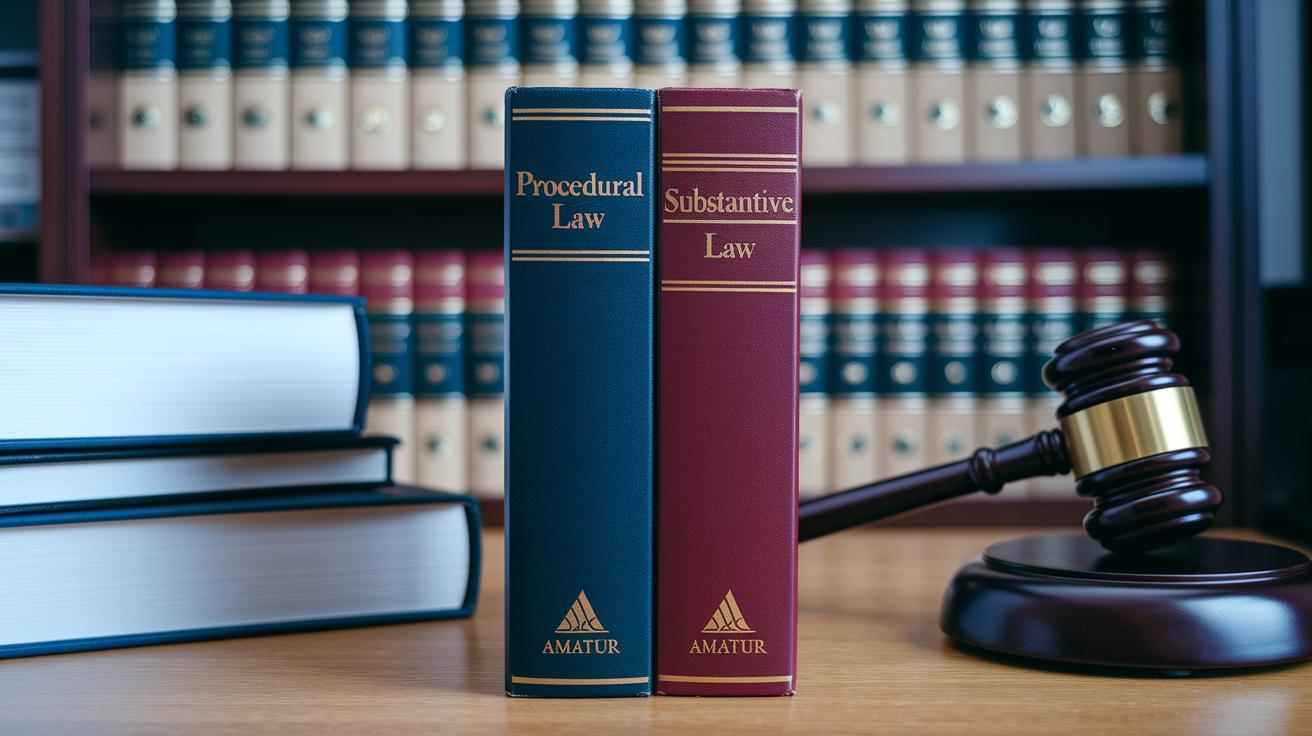
Ever notice how the law can seem like a confusing maze? In reality, it's made up of two parts. One part tells you what actions are wrong or what duties you have. The other part shows you the steps a court follows when making a decision.
Substantive law is like the guide that sets out your rights and explains what counts as a legal offense (that is, a crime or wrong act). On the other hand, procedural law works like a roadmap, showing you the steps from filing a case to presenting your evidence in court.
When you break it down this way, you can see not only which rules apply, but also how they’re put into action. It’s a bit like building a puzzle, each piece fits in to reveal the full picture of our legal system.
Procedural Law vs Substantive Law: Clear Legal Contrast
Let’s take a closer look at how substantive law and procedural law differ. This easy-to-read comparison shows the key points side by side, helping you build a clear picture of the roles each type of law plays.
| Aspect | Substantive Law | Procedural Law |
|---|---|---|
| Definition | Sets out your legal rights and duties, like what counts as a crime or a binding contract. | Describes the steps and rules for enforcing those rights, from filing a case to laying out evidence. |
| Focus | Decides what actions are allowed or illegal (for example, outlining crimes such as theft or assault). | Focuses on how the legal process works, guiding you through the court system from start to finish. |
| Example | Laws like the Indian Contract Act, 1872 or the Indian Penal Code that detail offenses and penalties. | Rules you follow in court procedures, similar to those in newer frameworks like the Bharatiya Nagarik Suraksha Sanhita, 2023. |
| Purpose | Defines what laws protect and what responsibilities you have, sometimes even changing past actions. | Makes sure that legal rights are enforced fairly and in order. These rules don’t change how past actions are judged. |
Substantive law lays down what the law is, it’s like having a legal map that tells you what counts as right or wrong. On the other hand, procedural law is like the directions you use to navigate that map in a courtroom. Imagine a trial: substantive law explains what wrongdoing occurred, and procedural law shows you how the trial will run. This clear break helps everyone know both the rules and how they are put to work.
Detailed Exploration of Substantive Law Framework

Courts and lawmakers are updating how substantive law works by adding new judicial ideas and legislative changes. They’re giving us a clearer picture of what legal duties mean today. Recently, judges have been more specific about building their decisions step by step. For example, one case explained that to show a contract was broken, you can’t just point to missing actions, you also have to prove real harm. This change makes us rethink how we traditionally saw contract issues.
New updates include:
| Update | What It Means |
|---|---|
| Clear Judicial Reasoning | Judges now explain in detail why certain parts of a contract are enforceable. |
| Property and Inheritance Changes | New rules address family setups and modern property issues. |
| Criminal Law Details | More discussion on duty, intent, and negligence (failing to act responsibly). |
These fresh insights add to our understanding of substantive law. They build on established legal principles while highlighting how the law should work in today’s world.
Navigating Procedural Law: Paths to Enforce Substantive Rights
Civil Procedural Law
Civil procedures help sort out disputes between people, businesses, or agencies. Think of filing a complaint like starting a formal chat with the court. The process moves step by step, almost like following a clear set of directions. First, you file the complaint. Then, both sides share their written details and evidence. Next, you set up depositions and schedule hearings. Finally, the case wraps up with a decision based on all the facts. Each step is designed to keep things fair and understandable, just like following a simple map on a road trip. Imagine how a new rule on evidence can turn a long fight into a quick settlement.
Criminal Procedural Law
Criminal law takes you on a journey from the initial investigation to a trial in court. At the start, police gather facts, make arrests, and prepare the case. This is the investigatory phase, where every detail matters. Then comes the adjudicatory phase, where a judge or jury listens to the evidence, considers all arguments, and decides the outcome. A recent update replaced India’s Criminal Procedure Code of 1973 with the Bharatiya Nagarik Suraksha Sanhita, 2023. This change aims to create clearer rules and boost fairness for everyone involved.
Key steps include:
- Collecting all necessary information during the investigation.
- Organizing fair hearings in the adjudicatory phase.
- Holding bail and sentencing hearings as needed.
Both civil and criminal procedures work to protect your rights by making sure every step is clear, fair, and consistent.
Case Study: Schiro v. Summerlin Illuminates Procedural vs. Substantive Distinction
In the 2004 case Schiro v. Summerlin, Justice Scalia explained that there are two main kinds of law. Substantive law lays out what our legal rights and duties are, like what you need to prove someone committed a crime. Meanwhile, procedural law is all about the steps courts follow to make sure those rights are respected. For example, if a law cuts down on a punishment, that change can sometimes be applied to old cases to give someone another chance at a fair sentence. But any changes to how a trial is run will never change what happened in past cases.
This case also shows that many appeals depend on the process used at trial. When a court looks at issues such as an illegal search and seizure, its main focus is on whether the right steps were followed during the trial. A mistake in how evidence is gathered or presented can make a judge question if the trial was fair, even when the actual law is clear.
Schiro v. Summerlin reminds us that knowing the difference between these two types of law matters a lot. This clear split is key in actual courtrooms because it shapes how lawyers build their motions and appeals, whether they’re leaning on proven legal rights or the fairness of the trial process.
Tracing the Historical Evolution of Procedural and Substantive Doctrines
Legal ideas started in early English common law when basic rules set out rights and duties. Over time, lawmakers built on these early ideas, gradually writing down rules that later shaped our modern legal systems. If you’re curious, you can learn more about the roots of Anglo-American law at this link: origins of legal doctrines in the US.
Meanwhile, the rules on how courts run came from Roman forums and then medieval writ systems (writs are formal written orders). At first, these guidelines mainly helped manage cases, and as time passed they became more organized, especially with clearer rules on evidence. Think of it as slowly tightening the process so things are consistent and fair.
A major shift happened in India when its criminal procedure changed. The old Criminal Procedure Code from 1973 got replaced in 2023 by the Bharatiya Nagarik Suraksha Sanhita. This update brings courtroom practices in line with today’s need for order and fairness.
So, both the rights-based rules and the ways courts work have kept changing to fit society’s needs. Their ongoing evolution shows a real effort to balance clear legal rights with smooth and fair court procedures, making sure justice happens not just on paper, but in real life.
Impact of Procedural vs. Substantive Law on Litigation Strategy

Attorneys often have to choose between two main parts of the law when planning a case: substantive law (the body of rules about rights and wrongs) and procedural law (the steps you follow in court). They know that changing the substance of a claim can broaden the relief a client might get, while careful use of procedural rules, like where a case is heard or whether evidence should count, can completely change the outcome.
Imagine a case for a contract breach. A lawyer might focus on the core issues to argue for stronger remedies. But if they overlook a step in the courtroom process, that mistake could drag the case out or even force it to be dismissed. This balance between what the law says and how court rules are applied is key to building a strong legal argument.
Attorneys use a few common strategies:
- They check if recent changes in the actual law could boost a claim for damages.
- They make sure every filing and court move sticks to the proper steps to avoid missteps.
- They use motions (requests made to the court) to challenge bad evidence that might hurt the case.
Following the proper court rules helps make sure that everyone gets a fair trial. When judges stick to these steps, it not only speeds things up but also protects the rights of everyone involved. Recent reforms have aimed to update courtroom practices so that cases can be wrapped up quicker while still keeping legal rights safe.
Here’s a little tip: when drafting a motion, open with a surprising fact. For example, "Imagine a trial where a tiny filing error turns a seemingly perfect case into one in trouble." That idea shows just how important it is to get both the substance of your case and the courtroom process right.
Final Words
In the action, we looked at how procedural law vs substantive law shapes the legal system. We broke down rights, court steps, and key cases using clear language that cuts through complexities.
We discussed historical shifts and practical tactics, offering guidance that makes legal ideas easier to understand. Keep these insights at hand as you build your legal expertise and feel confident discussing today’s legal trends.
FAQ
What are examples of substantive law vs procedural law?
The answer shows that substantive law, like the Indian Contract Act, defines legal rights and wrongs, while procedural law covers how courts handle filings, evidence, and trials to enforce those rights.
What is an example of substantive law?
The response highlights that a common example of substantive law is the Indian Contract Act, which sets rules for enforceable agreements and outlines legal responsibilities among parties.
How do I access a substantive and procedural law PDF?
The answer points out that such PDFs usually compile statutes and court procedures; you can find them on law school websites, legal libraries, or trusted online legal resources.
How does due process differ in procedural and substantive contexts?
The explained comparison indicates that substantive due process sets the basic rights, while procedural due process focuses on the fair steps used by courts to protect those rights.
What are the types of substantive law?
The answer clarifies that types include contract law, property law, criminal law, succession law, and remedies law, each creating rules for legal rights and obligations.
What is procedural criminal law?
The answer describes that procedural criminal law covers the methods used in criminal investigations, arrests, trials, and sentencing, ensuring that legal steps are properly followed.
What is the difference between substantive and procedural law?
The answer explains that substantive law defines rights and duties, while procedural law prescribes the methods and steps courts follow to enforce those rights throughout a legal case.
How are substantive and procedural law discussed in jurisprudence and on platforms like Quizlet?
The answer notes that in jurisprudence and on sites like Quizlet, substantive law is studied as the core set of legal rights, whereas procedural law is reviewed as the process for applying and enforcing those rights.