



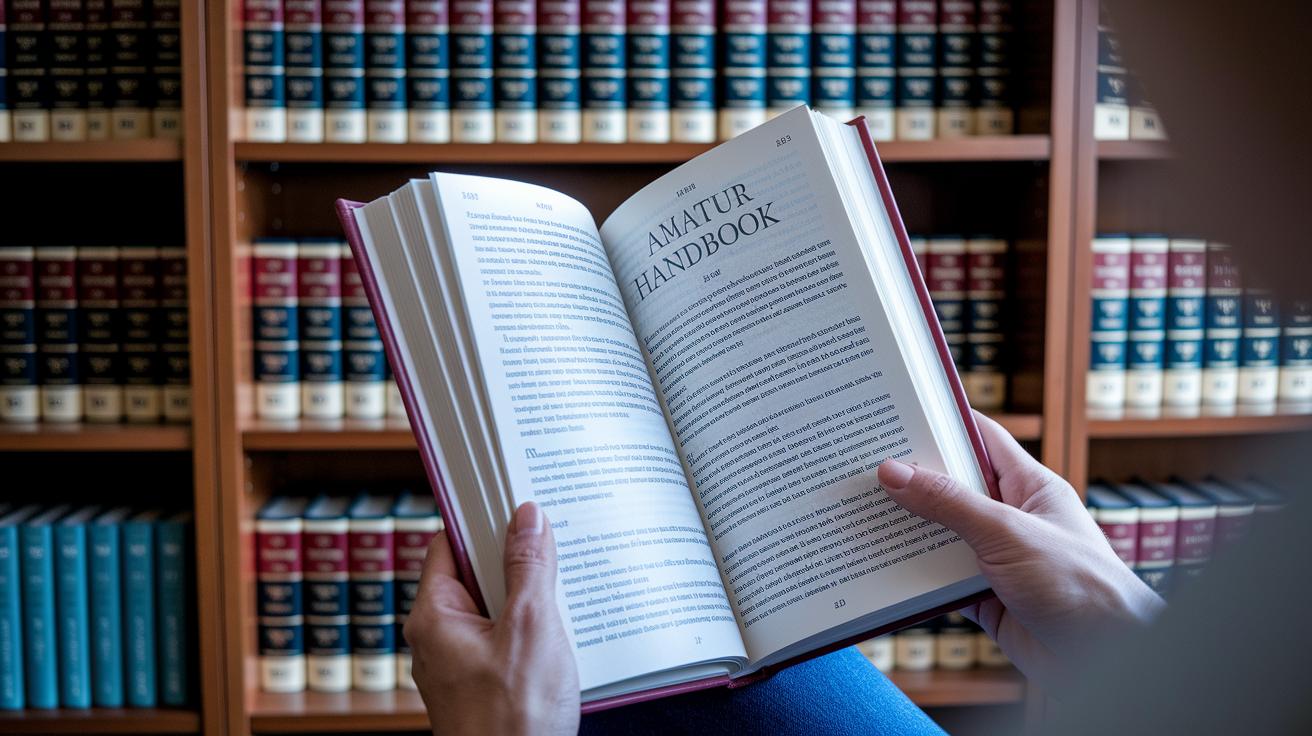
Is a simple handshake enough to seal a promise today? In our contract law guide, we explain how a clear agreement builds trust between parties. Imagine someone laying out details like work to be done, cost, and timeline, everything spelled out so everyone knows what to expect. We walk you through every step, from making the initial offer to reaching a mutual agreement (where both sides agree), ensuring there’s no room for misunderstandings. In short, every part of a contract works together to create a promise you can rely on.
Contract Law Overview in Your Legal Handbook
Contract law is like a promise backed by the force of the law. It’s an agreement between two or more people that you can rely on legally. Whether the agreement is written, spoken, or shown through actions, it still holds water. Imagine one person offering to paint a house for $500 with clear details on the work, price, and deadline. That clear offer sets up a fair deal that everyone can trust.
For a contract to work, it needs a few key parts. The offer is a clear plan that explains what one party will do, and acceptance means everyone agrees without changing the terms. Consideration is the value that each person brings, like money, goods, or services. Then there’s mutual assent, which means all parties truly agree on what’s laid out, a true "meeting of the minds." Each part helps build a solid agreement you can depend on.
Everyone signing a contract must be able to make clear decisions. That means they need to be of legal age and mentally capable (legal capacity). On top of that, the contract’s purpose and details must follow the law and public policy. Clear language in the contract keeps things simple and helps prevent problems down the road.
If you’re stepping into a contract, knowing these basics is a great start. When every detail is clearly shared and agreed upon, the contract turns into a reliable roadmap for everyone’s responsibilities. With clear terms, the chance of misunderstandings drops, and each promise holds real value.
Formation Principles in Contract Law Handbook

A contract starts when someone makes an offer, a clear plan that lays out the service details, cost, and timing. For example, imagine someone saying, "I will paint your house for $500 and finish by the end of the month." When the other party agrees exactly to this offer, that’s acceptance. But if they say, "I will paint your house for $550," it becomes a counteroffer and the original offer ends.
Then there’s consideration, which means both sides give something of value. In our example, the painter does the work and the homeowner pays money. This exchange strengthens the promise each party makes.
Mutual assent happens when both sides truly agree on the terms. In simple terms, it means everyone is on the same page.
Sometimes, agreements aren’t made in words at all. These are called implied contracts, where actions show that both parties understand there’s an agreement. For instance, if a homeowner always pays a contractor after seeing the work done, that behavior might signal an implied contract, a deal based on actions instead of spoken words.
| Concept | Detail |
|---|---|
| Counteroffer | A response that changes the original terms, ending the initial offer |
| Implied Contract | An agreement built on actions rather than direct words |
Enforceability Criteria in Contract Law Handbook
A contract has to meet a few clear benchmarks before it’s ready for court. One big factor is capacity. That means every person signing has the legal ability to agree to the contract terms (for example, being old enough and of sound mind). If someone is a minor or not mentally fit, the contract might later be thrown out.
Another important piece is legality. The purpose of a contract must not break any laws or push for illegal actions. So if a contract asks someone to do something against the law, like planning harmful activities, it loses its effect right away.
Public policy also plays a role. Courts won’t support contracts that could hurt community values or the well-being of society. For instance, if a contract has terms that promote unethical behavior, a court may decide it is not enforceable.
Contracts can also fall apart if they use unclear words. Vague language might be understood in many ways, which can lead to problems later. If one party tricks or misleads the other (fraudulent misrepresentation, meaning intentionally giving false information), the entire contract might be voided. And if a contract does not stick to the required legal steps (statutory requirements), it might be automatically blocked from being enforced.
Each of these points helps ensure that contracts are fair and clear for everyone involved.
Types of Contracts in Contract Law Handbook

Contracts come in lots of different forms to meet various needs. A written contract is one where everyone signs an official document, making it easy to check the agreed terms. In the business world, written agreements are often seen as the most dependable way to record what was decided.
But oral contracts work a bit differently. These are based on what people say, and they can be enforced if there’s enough proof of the conversation. And sometimes, even without words, the way people act can create a deal. For instance, if you consistently pay for a service, your actions show that you agree, even without a formal chat.
Then there are unilateral contracts where one party promises something if you do something in return, kind of like offering a reward for finding a lost pet. In contrast, bilateral contracts involve both sides making promises, like in a typical job agreement. Contracts can also be split into two groups: executed contracts, where everyone has finished their part, and executory contracts, which are still in progress.
When it comes to selling goods, the Uniform Commercial Code (a set of rules for commercial deals) tells us that any transaction over $500 must be in writing to keep everything clear.
| Contract Type | Definition |
|---|---|
| Written | Agreements backed by formal documents and signatures |
| Oral | Verbal agreements that can be enforced with proof |
| Implied | Agreements formed by the behavior of the parties |
| Unilateral | A promise made in exchange for someone’s action |
| Bilateral | Mutual promises by both parties |
Breach of Contract and Remedies in Contract Law Handbook
A breach happens when one side doesn’t stick to the agreement. It might mean not doing what was promised, taking too long, or doing a shoddy job. For example, imagine you hire a builder to finish a renovation by a certain date, but the work drags on or turns out poorly. That failure to meet the promise is considered a breach.
When a breach occurs, the court first checks to be sure a valid contract was in place. Then it figures out exactly which promise wasn’t fulfilled and whether that failure caused you any harm or loss. After that, the court works on calculating those losses step by step. Often, the right solution depends on the unique details of the case.
There are several remedies available to fix the situation. One option is specific performance, where the court tells the breaching party to follow through on the agreement exactly. Another remedy is monetary damages. These can appear in different forms: compensatory damages to cover the direct loss, liquidated damages that were laid out in the contract beforehand, or punitive damages designed to penalize especially harmful breaches. In really serious cases, the court might cancel the contract and return both parties to their original positions, as if things had never happened.
This way of handling breaches helps ensure that the party at fault is held responsible while the remedy matches the actual loss. Think of it like evaluating the details of a puzzle; for example, when a service provider delivers subpar work, the court looks at every clause in the contract and may even consider past cases before deciding on the fairest solution.
Dispute Resolution Tactics in Contract Law Handbook

Contracts usually include clear guidelines on how to handle disagreements. They often list options like negotiation, mediation, arbitration, or even going to court. Mediation, for instance, brings in a neutral helper (think of it like an umpire in a game) to steer discussions toward a fair solution. In contrast, arbitration means an arbitrator listens to both sides and then makes a binding decision that everyone must follow. The choice of method often depends on what the contract specifies, budget concerns, the need for privacy, and how strong the final decision will be.
Here are some common ways to resolve disputes:
- Negotiation: Parties talk directly to sort out their differences.
- Mediation: An impartial mediator steps in to help both sides reach an agreement.
- Arbitration: An arbitrator reviews the case and offers a final decision.
- Court Adjudication: This involves formal legal steps like pleadings (written statements of each side's claims), discovery (gathering evidence), trial, and potential appeals.
The right method really depends on the terms of your contract and the issue at hand. For example, many business agreements require you to try negotiation and mediation first before moving on to arbitration. These processes can help settle matters in a less disruptive and more cost-effective way while preserving important relationships.
By laying out these options clearly in a contract, all parties know what to expect when conflicts arise, making it easier to navigate through tough situations.
Drafting Accuracy and Precise Language in Contract Law Handbook
Clear, careful wording is key when drafting contracts. You want every term to be understood without any confusion. For instance, if "payment" is mentioned, specify that it means transferring funds on a given date. This way, you avoid any room for misunderstanding down the road.
Every clause works on its own. Each promise and duty should be explained clearly and completely. By defining terms precisely, both parties know exactly what to expect, leaving no space for misinterpretation.
Integration clauses, sometimes called merger clauses, make sure that the written document is seen as the complete and final agreement. This means extra, unofficial statements can’t change the deal. Reading the contract in its ordinary, plain sense (a plain meaning approach) reinforces the idea that every word must be taken as written.
When you draft with precision, you reduce the chance of disputes later and strengthen the contract’s legal power. In contract law, every small word matters, and being clear helps both parties to hold to their commitments.
Statutory Framework and UCC in Contract Law Handbook

Contract law comes from state common law, and the rules can change from state to state. Think of it as a simple rulebook that each state customizes to suit its own needs. The Uniform Commercial Code (UCC, a set of laws for selling goods) then steps in to provide clear guidelines when goods are involved. It explains how contracts are formed, outlines warranties, and sets clear expectations for performance. For instance, when a business sells a product, the UCC shows what counts as a promise kept, almost like clear rules for a fair exchange.
The UCC also treats some topics differently from common law, such as "consideration" (the value exchanged) and contract modifications, where changes might not require a completely new set of promises. Additionally, some laws require that contracts be written down, include specific details, or even be officially registered. These rules help keep everything clear and predictable for everyone involved. In short, statutes act as the backbone of the contract system, and the UCC fills in the details for transactions involving goods. Together, they work to keep commercial deals fair and organized.
Landmark Ruling Influences in Contract Law Handbook
Landmark cases have a big impact on contract law by setting the rules courts follow today. Take Lucy v. Zehmer, for example. This case shows that mutual agreement matters, even if one party might have been joking. Think about someone saying, "I'll sell my car for $1000" as a joke. If both people treat it as a serious offer, a court can decide it is a binding promise.
Another case, Hadley v. Baxendale, teaches us that you can only recover damages that were predictable at the time of making the agreement. Similarly, in Carlill v. Carbolic Smoke Ball, the idea of a one-sided contract becomes clear, if someone performs the required action instead of just making a promise, the offer may be enforced. Courts use these cases to decide what vague words mean and to resolve disputes fairly.
These decisions help us see clear standards in legal language and keep contract law consistent. For a deeper dive into how these landmark rulings work, check out the explanation at landmark ruling and legal precedent explained.
Final Words
In the action, we broke down the building blocks of contracts, from making an offer to handling disputes, and clarified how courts view each element. We walked through key steps like drafting precise terms and understanding enforceability. This clear look at the process gives you step-by-step insight into contract construction and dispute tactics. Rely on this legal handbook for contract law overview as a solid guide to keep your legal knowledge sharp and your discussions on trends both informed and precise. Stay positive and keep learning.
FAQ
Frequently Asked Questions
Where can I find contract law PDFs and notes?
Contract law PDFs and notes include titles like Legal Handbook for Contract Law Overview, Principles of Contract Law, and U.S. Contract Law resources. These documents provide clear explanations, examples, and step-by-step analyses of contract principles.
What is the general overview of contract law?
The general overview of contract law explains that a contract is a legally binding agreement where parties agree through offer, acceptance, and consideration, and must meet criteria like capacity and legality for enforceability.
What are the 4 P’s of a contract?
The 4 P’s of a contract highlight core aspects: parties involved, proposal (offer), promise (acceptance), and performance (fulfillment). They form the basic structure required for creating a binding agreement.
What are the 4 rules of contract law?
The 4 rules of contract law center on making an offer, obtaining acceptance, providing consideration, and ensuring mutual assent. These steps prevent confusion and help form a clear, enforceable contract.
What are the 7 essential elements of a contract?
The 7 essential elements of a contract are offer, acceptance, consideration, capacity (see legal capacity), legality of purpose, mutual assent, and sometimes a written form when required. These elements work together to create a solid legal agreement.