




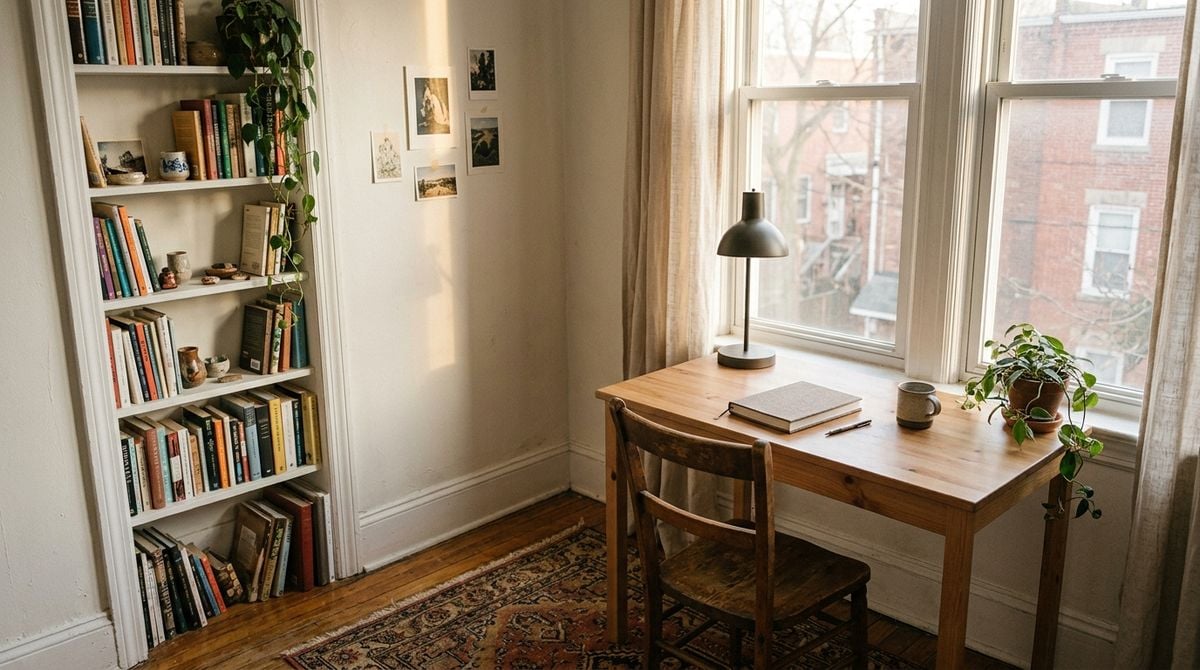
Many families now live in a studio apartment where the kitchen table is also the place for dinner, bills and homework. A child who needs to study in that setting can find it hard to focus, especially when the television or cooking noises are close by. A carefully chosen corner can still give a young learner a calm place to work. The notes below are general information for parents and teachers on setting up a study area in a compact home.
Choosing a Corner Away From the Cooker
Look around the apartment for a spot that is out of the way of the cooker, the sink and the main walkway. A position near a window gives good daylight, but it should not face direct glare on the screen or the page. Avoid corners next to the refrigerator, since its hum and its door traffic can interrupt concentration. The chosen space should feel private enough that a child can settle without being called away every few minutes.
Readers may also want to visit Arab Tek. Compare each guide with the actual room and mark the spots that are both quiet and well lit. Ask the child for an opinion, since a study place is more likely to be used when the learner feels involved in the choice. A short trial of a few evenings can show whether the corner truly works.
Setting Up a Desk That Fits Small Spaces
A narrow table or a fold-down desk can fit a studio corner and still provide a firm surface for writing. Choose a chair that supports the lower back and allows the feet to rest flat on the floor. Keep the desk surface clear of anything that does not belong to study, such as mail or cups, so the child can focus on the task. A small tray can hold pencils, a ruler and a notebook so that the materials stay in one place.
You can also visit TechRegar for more reading. Position the lamp on the opposite side from the child’s writing hand to reduce shadows. Keep a labeled box for art supplies and extra paper under the table, so that the surface stays free. A tidy desk helps a young learner start work more quickly each evening.
Separating Study Time From Kitchen Life
Shared rooms make it hard for a child to know when study time begins and ends, so create a simple signal. A small card placed on the desk can show that work has begun, and turning it over can mark the end of the session. Ask family members to keep the kitchen noise low during homework hours, and to avoid asking the child for chores while the card is showing. Consistent signals help the whole household respect the study time.
Screens can be a major distraction in a small home, so keep phones and tablets out of the study corner unless they are needed for a task. A timer on the desk can mark short breaks, which help a child stay fresh during longer sessions. Encourage a short stretch or a glass of water at each break, then return to the desk with a clear goal. For a related read on this site, see Building Connected Networks for Regional Animal Rescues.
Using Storage to Keep the Corner Calm
Storage is the key to a studio study space, so use shelves and hooks wherever possible. A slim shelf above the desk can hold textbooks and folders, keeping the surface free for writing. Store school bags on a hook near the door, so that the study area never fills with backpacks. Label each container so that a child can put things away quickly at the end of the day. Keep seasonal materials on a higher shelf, and bring them down only when they are needed.
A simple checklist for organizing school materials at home can be printed and pinned near the desk. Review the storage every week and remove any item that is no longer needed. Return unused supplies to the box after each session to keep the corner neat. A clear system protects the study time from the usual clutter of a busy household. Reviewing the system once a term keeps the corner useful as the child grows.
Supporting Steady Progress at Home
A study corner works best when the child feels supported rather than watched. Check in briefly at the start of each session, and praise steady effort rather than only the final result. If the child struggles with a task, suggest a short break and a fresh look at the problem. Parents and teachers who communicate about the work can help the learner stay motivated through a busy term. Short notes between home and school can make that conversation easier for everyone involved.
A Small Corner Can Hold Big Lessons
A studio apartment does not have to limit a child’s learning. A well chosen corner, a steady desk, clear signals and tidy storage can make a kitchen table feel like a place for study too. The approach works best when the family shares the same routine and respects the time set aside for learning.