



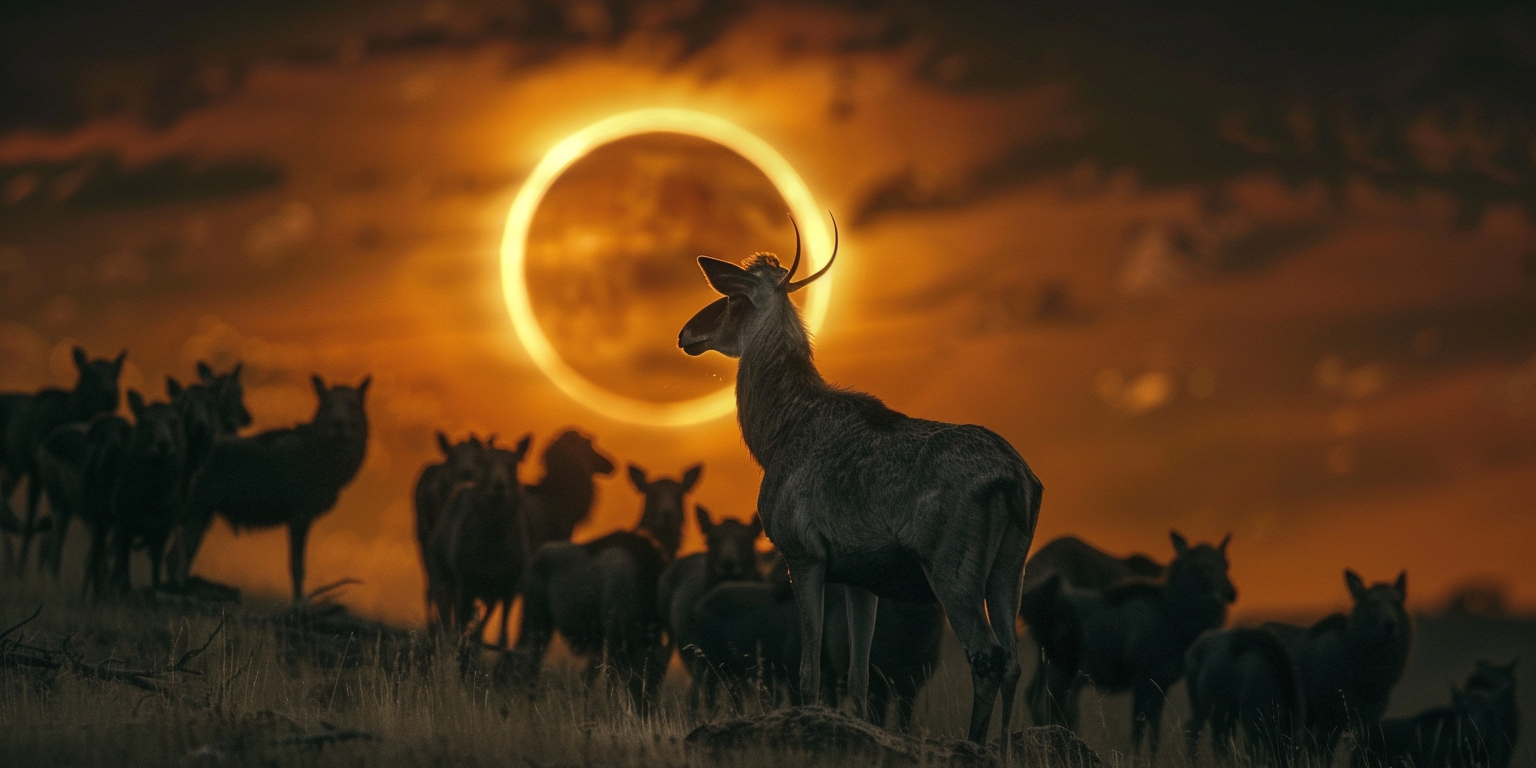
Considering how much power a solar eclipse can have on humans, it only makes sense that other creatures would have similar experiences. While some animals seem to completely ignore what’s going on around them, there are plenty that exhibit dramatic changes in behavior before returning to normal once everything is said and done.
1. Getting Gussied Up
Many bird species that are otherwise inactive during the day will start to preen themselves once totality hits. Tawny Frogmouth birds, for instance, suddenly get vigilant and make sure their feathers are in perfect order. Cockatoos will do the same and may even get close to other members of their species to help them look their absolute best. Some researchers have suggested that this might be done to ensure that the birds could make a quick getaway if predators decided to take advantage of the sudden loss of daylight.
2. Engaging in Competition
Harbor seals are found in both temperate and arctic waters, so they’re uniquely adapted to many different situations. That led many to believe that they’d show very little of a reaction when solar eclipses occurred. Though most seals don’t seem to do anything special during the lead up, many of them actually seemed to swim competitively and even spar with one another as though they were involved in some kind of contest.
3. Locking Up and Looking Upward
Some scientists have observed Komodo dragons standing completely still during the lead up to a solar eclipse, with some saying that they appeared almost like statues. Once the moon moved into place and blocked out the sun, however, these same monitor lizards started to run around the area they were in and tried to climb the walls until the eclipse past. Galápagos giant tortoises were also found to be sedentary while they were waiting for an eclipse to start, but once it began a whole group of them started to scatter and then even looked skyward as though they were trying to figure out what was happening. Humans would need to use specialized eclipse glasses to safely observe such an event, but it’s possible that some reptiles might be sturdy enough to watch it without them.
4. Treating it Like Nighttime
A group of grizzly bears under observation at a zoo acted almost like they thought it was night during the eclipse. For most of the time, the bears rested the same way they would in the later hours of the day. After the sun got blocked out, they woke up and moved close to a window the same way they would have if they were interacting with visitors in the evening. After the sun came out, most of the bears went right back into the shade and started playing with their toys again.
Since most observations of animals experiencing an eclipse occurred at zoological parks, it’s possible that human intervention may have influenced how they were acting. Nevertheless, it’s a good bet that wild critters wouldn’t act much differently in their own habitats. Animals often respond to the sudden changes in light and temperature during an eclipse as if it were dusk.