




Are AR-15s legal? This question gets people talking in a big way. Some find the answer shockingly confusing. Today, we outline the federal rules and state restrictions you need to follow if you want to own one. Think of it as a simple checklist: fill out a form, pass a background check (a review of your criminal history), and buy from a licensed dealer. We will cut through the myths and share the clear facts about owning an AR-15. Let’s clear up the confusion together.
Federal Laws Governing AR-15 Legality
AR-15 rifles are legal under federal law today. They fall under the category of semi-automatic, centerfire long guns as defined by the Gun Control Act of 1968. In simpler terms, they’re seen much like other common sporting rifles used for target shooting.
To purchase an AR-15, you must be at least 18 years old. You’ll need to fill out ATF Form 4473 and pass a background check through the NICS system (a quick name for the National Instant Criminal Background Check System). Think of it like ticking off items on a checklist to ensure everything is in order before the deal goes through.
Only those with a Federal Firearms License (FFL) can manufacture or sell AR-15s. This rule makes sure that only trusted, licensed dealers handle these transactions. And if you decide to convert an AR-15 into a short-barreled rifle, the National Firearms Act (a law that controls such changes) applies, you must complete ATF Form 1 or Form 4 and pay a $200 tax stamp.
Between 1994 and 2004, the Federal Assault Weapons Ban temporarily targeted certain features on firearms. Since that ban ended, federal law no longer stops you from owning an AR-15 with those specific features.
| Requirement |
|---|
| You must be at least 18 years old |
| Fill out ATF Form 4473 |
| Pass a NICS background check |
Overall, these clear federal guidelines help ensure that AR-15s remain legal, as long as every rule and step is carefully followed.
State-by-State AR-15 Restrictions and Permits

State laws for AR-15s differ a lot from place to place. Some states go beyond federal rules and make their own limits. In many cases, bans or special permits come into play when AR-15s have certain features. This means that if an AR-15 has a particular design, you might not be allowed to own it or you might need extra paperwork to buy it.
Take California, for instance. They do not allow AR-15s with features like detachable magazines. Instead, they require guns with a fixed magazine, meaning you can’t remove and change the magazine quickly. New York has a similar approach with its SAFE Act, which stops many common modifications on AR-15s. In New Jersey, the AR-15 can fall under a strict list of assault firearms, making it much harder to own legally.
Connecticut, meanwhile, bans some AR-15 models made after 2013. In Maryland, the law targets features such as flash suppressors and adjustable stocks that are often seen on AR-15s. Massachusetts also lists the AR-15 as an assault weapon, adding extra steps for buyers. Over in Hawaii, buyers must get a special permit before they can own an AR-15.
On the other hand, states like Illinois run a more regulated process. There, you need a Firearm Owner Identification (FOID) card and must register your gun. Even in states without strict additional limits, many still follow federal rules, and some enforce magazine limits, usually capping the capacity at 10 rounds in some cases.
In short, state restrictions for AR-15s mix legal rights with safety rules. Each state sets its own balance to keep the arms market regulated and safe.
| State | Legal Status | Key Restriction |
|---|---|---|
| California | Legal with restrictions | Feature-based ban, fixed-magazine requirement |
| New York | Legal with restrictions | SAFE Act feature ban |
| New Jersey | Legal with restrictions | Assault firearm roster inclusion |
| Connecticut | Limited Legal | Post-2013 AR-15 ban |
| Maryland | Legal with restrictions | Ban on flash suppressor/adjustable stock |
| Massachusetts | Legal with restrictions | Listed on assault weapon list |
| Hawaii | Legal with permit | Permit-to-purchase required |
| Illinois | Legal with registration | FOID and registration mandated |
Assault Weapon Legislation Timeline and Historical Context
In 1989, Public Law 101-647 introduced the term assault weapon by setting clear guidelines. Think of it as laying down the first rule that would shape future discussions about these guns.
In 1994, the Violent Crime Control and Law Enforcement Act (a law designed to reduce violent crime) put a 10-year hold on some semi-automatic guns and high-capacity magazines. It was like a temporary stop sign for certain firearm features. When the ban ended in 2004, many wondered if the strict rules might eventually loosen up.
Between 2004 and 2013, ten states stepped up by creating their own bans or testing specific features of assault weapons. This period showed that different regions were handling the issue in their own ways. Then in 2018, New York updated its laws with the SAFE Act amendments, narrowing the list of banned features and signaling a shift in how lawmakers view these weapons.
From 2022 to 2023, new proposals in Congress sought to reinstate a federal ban. This ongoing debate shows that defining assault weapons continues to be a central and evolving topic in legislative discussions.
Legal Process for Purchasing and Complying with AR-15 Regulations
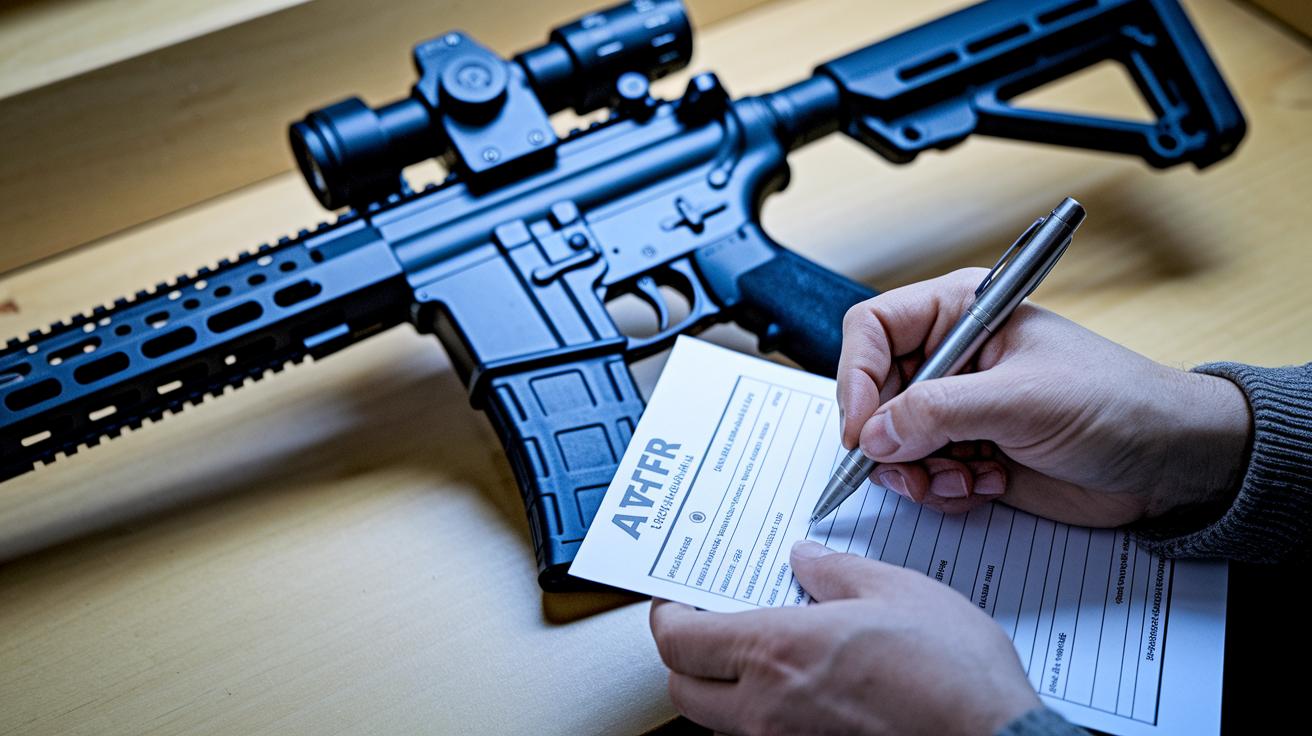
Start by choosing a trustworthy, federally licensed firearms dealer with a good reputation. At that dealer, you will fill out ATF Form 4473 – think of it as checking off the first step on your list.
Once you complete the form, you'll go through a NICS background check. Here, you need to show a government-issued ID and prove you are at least 18 years old. It’s a bit like flashing a membership card at an exclusive club.
In some states, you must also wait before you can take your AR-15 home. While you wait, double-check if your firearm needs any changes to meet local rules. For instance, some places may require you to add magazine locks or change the stock type to follow state laws.
Here's a simple rundown of the steps:
| Step | Description |
|---|---|
| 1 | Select a licensed dealer and complete ATF Form 4473. |
| 2 | Pass a NICS background check with your government-issued ID. |
| 3 | Wait if your state requires a waiting period. |
| 4 | Make any required modifications, like adding a magazine lock or changing the stock type. |
| 5 | Register your rifle or obtain a permit if your state asks for it. |
If you're interested in a short-barrel version, there are a few extra steps. You will need to file ATF Form 1 or Form 4, provide a fingerprint card, and pay a $200 tax stamp fee. These extra steps work like additional checkpoints to make sure everything is in order.
Also, many states have safe-storage laws. This means you might have to keep your firearm in a locked container or attach a trigger lock. Following these clear steps helps you stick to both federal and state laws while ensuring you use your AR-15 responsibly.
Current Debates and Potential Reforms on AR-15 Regulations
Federal lawmakers are buzzing about new ideas for AR-15 rules. One popular idea is to require a full background check for every purchase. Think of it like applying for a bank loan, every detail is looked over to ensure safety. Another suggestion is to set the purchase age for semi-automatic rifles at 21, giving officials extra time to check a buyer’s history.
States are looking at their own ways to help. Many are expanding red flag laws and extreme risk protection orders (orders that temporarily remove guns from people who might be dangerous). These actions work together with federal ideas to create a mix of solutions for managing these weapons.
Big Supreme Court decisions, like District of Columbia v. Heller (2008) and New York State Rifle & Pistol Assn. v. Bruen (2022), have stressed the rights of individuals. Yet these rulings also add extra layers to the debate and make it trickier to change how assault weapons are defined.
Recent polls show strong public support as well. For instance, 90% of people back universal background checks while 60% support bans on certain features. Lawmakers are still weighing these opinions, trying to balance personal rights with steps that might make our communities safer.
Lawmakers, scholars, and advocacy groups all continue to share their thoughts and ideas on these proposals, carefully considering how the law plays a role in AR-15 ownership.
Final Words
in the action, this article reviewed federal laws, state rules, historical milestones, and the practical steps needed to purchase an AR-15. It unpacked key requirements, ranging from background checks and permits to safe storage practices. The discussion also shed light on ongoing debates and reform ideas in the legal community. Taken together, these insights help clarify how public policy shapes our understanding of whether ar-15s legal under current federal and state regulations, leaving us with a clearer picture and a hopeful outlook for responsible ownership.
FAQ
Are AR-15 rifles legal under federal laws?
AR-15 rifles remain legal as they are classified as semi-automatic, centerfire long guns under the Gun Control Act of 1968, with legal purchases requiring background checks and compliance with ATF guidelines.
How do federal laws and the federal arms act affect AR-15 regulations?
Federal laws impact AR-15 regulation by setting guidelines for manufacturing and sale through licensed dealers, while the federal arms act helps shape rules around background checks, feature modifications, and overall compliance.
What defines an assault weapon and how has legislation shaped AR-15 rules?
Assault weapon definitions have evolved from early laws like the 1989 Public Law and the 1994 ban, influencing today’s feature assessments and state-specific restrictions for AR-15 configurations.
What is the legal process for purchasing an AR-15, including background check requirements?
The purchase process requires selecting a licensed dealer, completing ATF Form 4473, passing a NICS background check, and following any state-specific steps like permits or feature modifications.
How do state regulations vary regarding AR-15 ownership and permits?
State regulations differ, with some states imposing feature bans, mandatory registration or permits, and magazine limits, while most allow unmodified AR-15 ownership following federal guidelines.
What current debates and potential reforms are shaping AR-15 regulations?
Ongoing debates focus on expanded background checks, proposals to adjust permitted features, and court rulings, with discussions driven by public opinion and evolving state permit policies.