



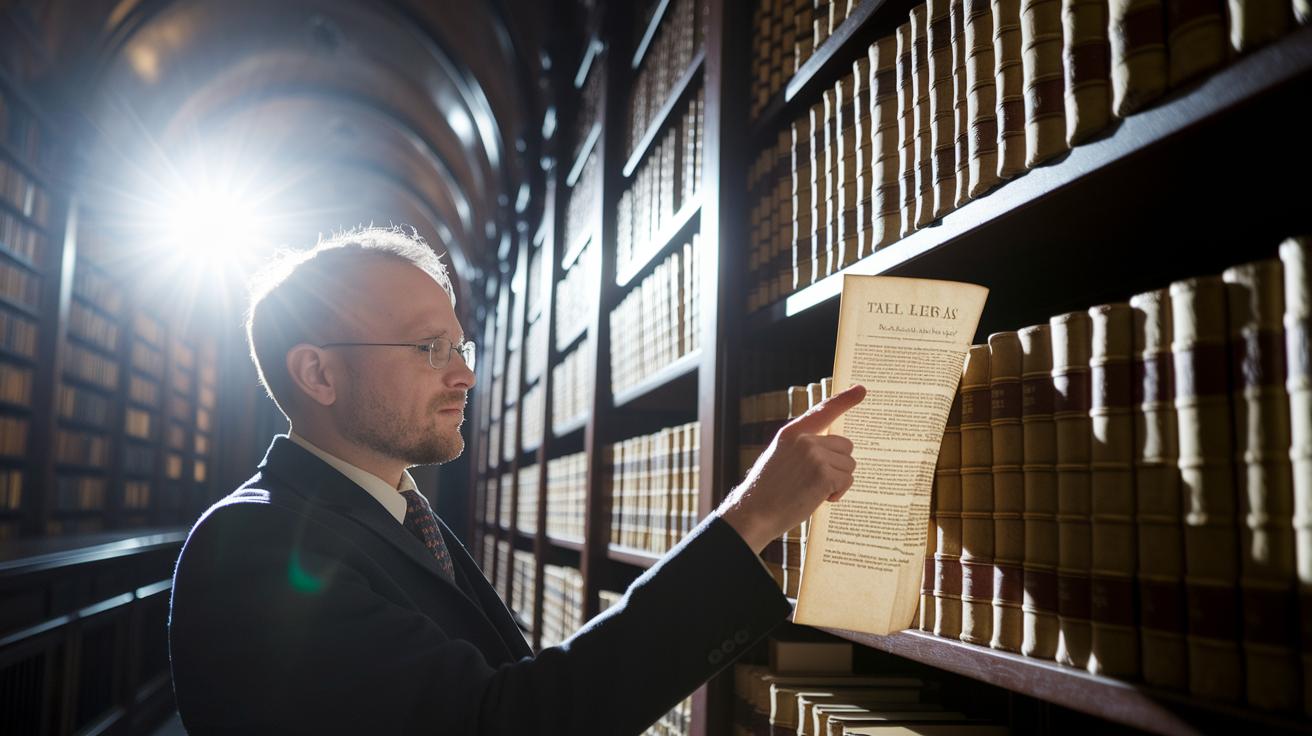
Have you ever wondered where our laws began? Think of ancient clay tablets with simple rules that sparked debates still heard in courtrooms today. Legal history (the study of how laws have developed) isn’t just about dusty old records, it’s the story of humble beginnings growing into systems that guide our everyday lives. In this post, we take a look at early carvings and follow their journey to important documents that continue to shape modern law.
Overview of Legal History: Tracing the Evolution of Law

Legal history is all about looking back at how different rules and records have helped shape the laws we live by today. It shows us the journey from simple rules carved in stone to the detailed legal systems we see now. Back in the day, people wrote down their rules on clay tablets, and those early codes like the Code of Ur-Nammu and the Code of Hammurabi helped form the basis for what we now think of as law. In plain terms, these records let us see how legal ideas grew and changed as cultures and technologies advanced.
| Year/Period | Development | Origin/Culture |
|---|---|---|
| c. 2100 BCE | Code of Ur-Nammu | Mesopotamia |
| c. 1754 BCE | Code of Hammurabi | Babylon |
| 621 BCE | Draconian Constitution | Athens |
| 450 BCE | Twelve Tables | Rome |
| 529 CE | Justinian Code | Byzantine Empire |
| 1215 | Magna Carta | England |
| 1804 | Napoleonic Code | France |
| 1789 | U.S. Constitution | United States |
This timeline ties early codes directly to modern legal ideas. It’s like watching a puzzle come together, from basic rules in old Mesopotamia to the constitutional documents guiding nations today. These records are more than just old stories; they form the building blocks for debates, reforms, and decisions in courtrooms now. When we see how rules started simple and then grew more detailed over time, we get a clear picture of how our legal discussions today are linked to the past.
Origins of Legal History: From Archaic Codes to Byzantine Edicts

Long ago, people in Mesopotamia began writing down their rules with laws like Ur-Nammu (around 2100 BCE) and Hammurabi’s Code (about 1754 BCE). These early laws turned common customs into clear, written guidelines that helped shape everyday life. Later, the Romans built on this idea by creating the Twelve Tables (450 BCE), which laid out the rights and duties of citizens clearly, like placing the first sturdy bricks of a long-standing building.
Then came the Byzantine reforms, such as the Ecloga (around 726 CE). They took these older ideas and adjusted them to meet new social needs and administrative practices. At the same time, in medieval Europe, local customs grew into feudal traditions, giving rise to manorial courts and customary laws. Think of it like family recipes passed down through generations, each change adding a new flavor while keeping the original taste.
Over time, scattered local rules were replaced by centralized monarchies that introduced uniform legal systems, bringing a sense of order and consistency to governance.
Renaissance Reforms and Enlightenment Doctrines in Legal History

The Renaissance and Enlightenment were major turning points in legal history, turning outdated practices into fresh ideas about fairness and accountability. Scholars began questioning old customs, treating law as a living subject that grew through ongoing discussion and debate.
During the Renaissance, European universities dove back into ancient Roman law and reexamined classic works like the Justinian Corpus Juris Civilis (a key collection of Roman laws). Researchers spent hours poring over these rediscovered texts, uncovering early thoughts on justice and order. One professor even found handwritten notes in a centuries-old manuscript that offered a fresh look at early legal rights. This surge of new insights linked the wisdom of the past with emerging ideas, setting up the movement toward systematic, organized laws. These breakthroughs laid the groundwork for innovations in justice that still shape legal codes today.
Later, Enlightenment thinkers pushed legal thought even further. Works like Montesquieu’s Spirit of the Laws (1748) and Rousseau’s Social Contract (1762) stressed the importance of separating government powers and safeguarding individual rights. Their ideas built the intellectual foundation for our modern social contracts, sparking reforms that continue to influence legal systems around the world.
Legal History: Bold Roots and Timeless Impact

In colonial times, local customs were turned into clear, written rules that helped manage everyday life. Early laws like the Virginia Laws of 1610 and the Massachusetts Body of Liberties of 1641 provided simple guidelines that let communities settle disputes and keep order. Imagine a small town gathering to debate issues by referring to a written rulebook, this change set the stage for modern, fair legal systems.
Then came revolutionary documents that brought fresh ideas about freedom and government responsibility. The U.S. Declaration of Independence in 1776 and the French Declaration of Rights in 1789 introduced clear thoughts on personal liberty and fairness. Soon after, the U.S. Constitution was approved in 1789, with the Bill of Rights added in 1791 to protect individual freedoms. These key writings challenged old ways and sparked debates in courtrooms and legislative halls, much like stirring up a lively town meeting.
Finally, the landmark case Marbury v. Madison in 1803 paved the way for judicial review (the process by which courts interpret laws). This decision empowered judges to check that laws followed the Constitution, marking a turning point in ensuring that everyone played by the rules.
Judicial Evolution and the Birth of Courts in Legal History

For many years, our courts evolved from simple gatherings of neighbors into organized institutions. At first, people solved disputes in small, informal settings. But as communities grew, these casual meetings turned into regular courts with clear rules. This change built trust in the legal process by moving from personal judgments to decisions based on fairness.
Tribunal Inception
In early communities, groups would come together in tribal councils to settle disputes. Village elders met to resolve issues, laying the first stepping stones toward formal courts. In medieval Europe, local customs slowly transformed into manorial courts, where decisions balanced tradition with fairness. A huge turning point came in the 1300s with the creation of the English Court of Chancery. This court focused on giving fair relief (equitable relief: fair treatment) by bending strict rules when needed, sort of like adjusting a well-known recipe to make it just right.
Trial Procedures
Over time, court processes were refined to ensure every outcome was fair. By the days of the Magna Carta, rules for jury trials allowed everyday citizens to participate in deciding cases. Then, in the 17th and 18th centuries, the right to have a lawyer (right to counsel: getting legal advice) became standard, so people could get proper advice during trials. Judges, lawyers, and juries began working side by side, each building the case step by step. With clear guidelines and equal chances for everyone, these early practices set the stage for the modern legal systems we count on today.
Influential Figures and Jurist Biographies in Legal History
Our legal world stands on the shoulders of pioneers whose bold ideas reshaped the way we use and understand the law. Their work echoes in every courtroom and debate today, showing us that progress comes from both careful thought and the courage to challenge old rules.
Think of Hammurabi, around 1754 BCE. He was one of the first to write laws down, setting a strong foundation for written legal rules that has lasted many generations.
Then there's Justinian I (483–565 CE), who put together the Corpus Juris Civilis. In simple terms, this was a massive set of laws that has guided legal systems for centuries, making law more organized and accessible.
Sir William Blackstone (1723–1780) also made a big mark with his Commentaries on the Laws of England. His clear, everyday observations helped shape legal ideas that many still rely on today.
John Marshall (1755–1835) served as U.S. Chief Justice and built the principle of judicial review (the idea that courts can check government power). His work ensures that no one branch of government grows too strong.
Napoleon Bonaparte (1769–1821) brought about the Napoleonic Code, a set of laws that simplified and modernized legal principles so that they could be used broadly and understood easily.
Finally, Ruth Bader Ginsburg (1933–2020) left a lasting legacy with her decisions that pushed for gender equality and fairness in legal processes. Her work reminds us that clear, just laws are the backbone of a fair society.
Modern Codifications and Contemporary Amendments in Legal History

Lately, lawmakers have been reworking our legal system to be clearer and fairer. Take the Model Penal Code (1962, a guide that sets standard rules for criminal law) as an example: it provides everyone, from ordinary citizens to judges, with a single, straightforward set of rules. Imagine a neighborhood where everyone agrees on the same guidelines instead of juggling conflicting rules. That shared clarity is what fairness is all about.
Big changes in legal history also mark this refresh. The United Nations Universal Declaration of Human Rights (UDHR, 1948) laid down basic rights that most countries now strive to uphold. Key moments like the 19th Amendment (1920, which granted women the right to vote) and the Civil Rights Act (1964, which fought discrimination) reshaped how society handles fairness. Later, laws such as the Americans with Disabilities Act (1990) and the Sarbanes-Oxley Act (2002) targeted specific social and business issues. More recently, the GDPR (2018, a law ensuring clear rules for handling personal data) pushed for more transparency. Each of these steps shows our commitment to updating laws to fit today’s values.
These legal changes still have a big impact on how laws work now. Lawmakers, judges, and the public keep the conversation going, making sure our rules evolve along with new challenges and global standards.
Final Words
In the action, this article traced legal history from ancient codes and medieval decrees to modern legislative updates. We saw how early statutes evolved into influential reforms and constitutional milestones. Each section offered a glimpse into origins law, trial procedures, and the impact of groundbreaking jurists. The timeline shows how archaic codes laid the groundwork for today’s legal systems. This recap provides a clear picture of how legal history influences our current legal landscape, leaving us optimistic about further progress in legal understanding.
FAQ
What is legal history and why is it important?
The study of legal history examines law’s evolution from ancient codes to modern statutes, showing how past legal decisions and documents continue to influence today’s legal systems.
How did ancient legal codes shape modern law?
Ancient legal codes like Hammurabi’s and the Twelve Tables set early models for justice by defining rules and responsibilities, which have gradually evolved into the principles found in modern legal systems.
What role did the Magna Carta play in legal tradition?
The Magna Carta introduced early protections for individual rights and limited the power of rulers, laying a foundation for modern constitutional principles and the evolution of judicial oversight.
How did Renaissance and Enlightenment reforms transform legal theory?
Renaissance and Enlightenment reforms transformed legal theory by reviving studies of Roman law and introducing ideas such as separation of powers and social contracts that continue to influence modern law.
How did colonial ordinances and constitutional documents influence modern law?
Colonial ordinances and constitutional documents established early governance guidelines and individual liberties, shaping the structure of modern legal frameworks and practices that protect citizens’ rights today.
How did early dispute resolution evolve into today’s modern courts?
Early dispute resolution methods, from tribal councils to manorial courts, evolved into formal court systems with procedures like jury trials and right to counsel, ensuring fairness in today’s legal processes.
Who are some influential figures in legal history?
Influential figures in legal history include Hammurabi, Justinian I, Blackstone, John Marshall, Napoleon, and Ruth Bader Ginsburg, each contributing landmark developments that shaped legal practices over time.
What impact do modern codifications and amendments have on legal practice today?
Modern codifications and amendments, such as the Model Penal Code and key civil rights laws, update legal standards to protect individual rights and address emerging societal challenges in contemporary law.