




Have you ever wondered if big changes can revive a struggling nation? Back in the 1800s, the Ottoman Empire took a courageous step with the Tanzimat reforms. Facing military defeats and long-outdated customs, its leaders rebuilt laws and government systems, bringing in fair rules and new ideas from Europe. These reforms reshaped everyday rights and the inner workings of the empire. In doing so, they sparked a surprising move toward modernity that challenges our old view of a fading empire and opened the door to lasting progress.
Tanzimat Reforms Spark Ottoman Progress
Between 1830 and 1870, the Ottoman Empire kicked off a bold set of changes known as the Tanzimat reforms. These reforms were born from a long string of military losses and territory being snatched away, mainly by Russia and the Habsburgs starting in the mid-1750s. The empire realized its military and economic ways were outdated compared to Western Europe, so a big push for modernization was in order.
One early highlight was the Edict of Gülhane in 1839. It promised better protection of life, property, and freedom of worship for everyone. This statement of intent marked a fresh start, setting the scene to upgrade Ottoman institutions with modern European ideas. The Tanzimat reforms changed government workings and redefined social roles, giving non-Muslims equal legal rights with Muslims for the first time.
These changes touched every part of life in the empire. They reorganized administrative systems, brought in new legal codes, and gave the education system a fresh look inspired by European models. New schools and universities emerged, and a new, secular elite began to rise as old religious authorities lost their grip. On the economic side, they ended traditional guilds, established private property rights, and revamped tax policies. Each step was designed to clear away outdated systems that had long slowed progress.
Amid these challenges and chances for change, the Tanzimat reforms laid the groundwork for future constitutional and political shifts. By fixing internal issues and pushing back against external pressures, the empire made a determined move toward modernization even as it struggled. Many Ottoman thinkers saw these reforms as a necessary step to revive a faltering empire on the global stage.
Administrative Restructuring under the Tanzimat Reforms
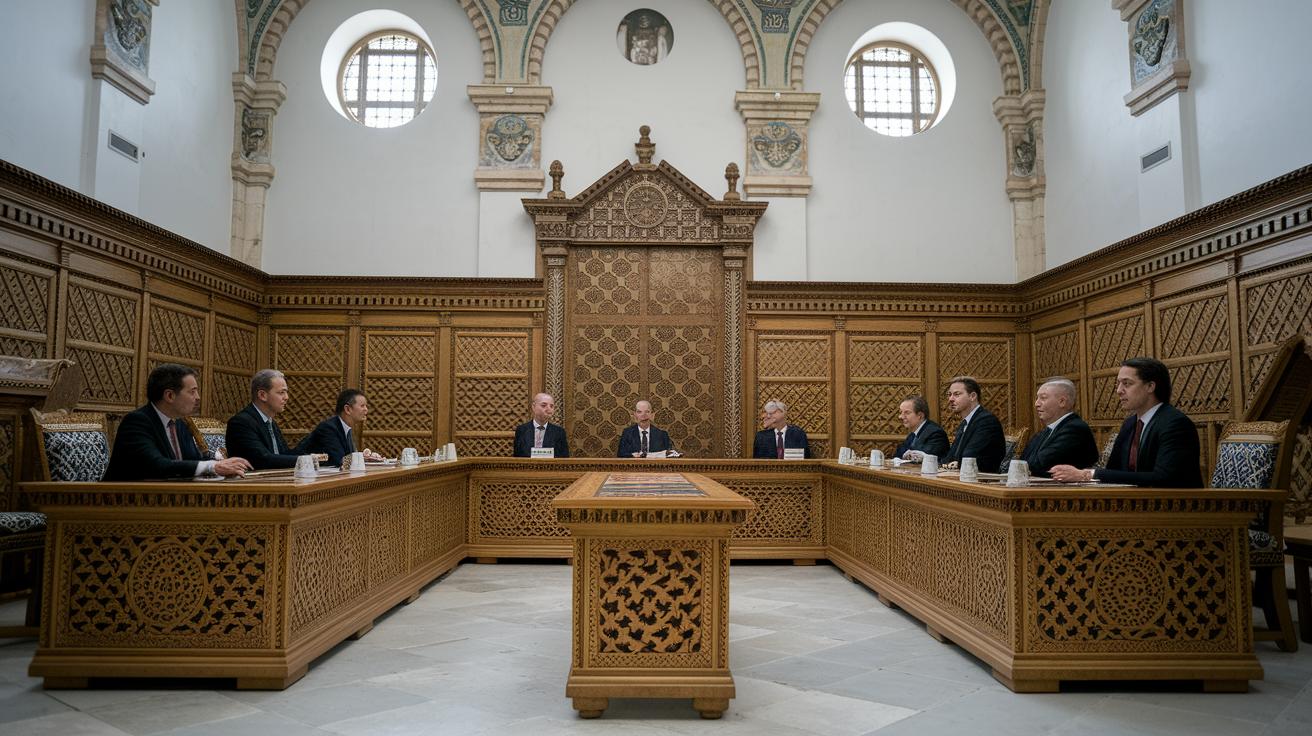
The Tanzimat reforms changed how the empire was run by moving power to the center. Ottoman leaders set up new ministries and reorganized local councils so that rules came from one common source. This meant local officials were now selected using standardized methods borrowed from Western Europe, making the system more uniform and fair.
Provincial Governance Realignment
The old system of beylerbeyilik was scrapped and replaced by elected councils under central control. This change gave the center more say over local matters, reducing regional independence. Imagine swapping a patchwork of local rules for one rulebook everyone had to follow. In some regions, local governance had operated almost like small independent states before these reforms came into practice.
Centralized Military Command
The military was also reshaped. Command shifted from local beys to a new War Ministry that oversaw the army like never before. New training programs for officers helped turn a disorganized force into a coordinated team ready for modern challenges. Picture a once-jumbled group of soldiers coming together through modern training and clear instructions.
| Year | Edict Name | Administrative Change | Purpose |
|---|---|---|---|
| 1839 | Gülhane Edict | Introduced standardized provincial governance | Strengthen central control |
| 1840 | Council of State formed | Created consultative legislative body | Legal drafting and oversight |
| 1856 | Hatt-ı Hümayun | Expanded civil service roles | Bureaucratic professionalization |
| 1864 | Provincial Reform Law | Abolished eski vilayet structure | Uniform administration |
Judicial and Legal Codification during Tanzimat
During the Tanzimat period, Ottoman legal reforms reshaped the empire’s courts. The new civil and penal codes promised that everyone, including non-Muslim citizens, would be equal before the law. European court rules were brought in, making trial and appeal processes much clearer and more fair. It was like giving everyone the same rulebook to follow.
This overhaul reoriented Ottoman law and paved the way for our modern legal system. People began to see their rights more clearly, almost like a clear set of guidelines in a classroom debate, where every rule is known and followed.
Key legal codes of the era are shown in the table below:
| Legal Code | Description |
|---|---|
| 1840 Land Code | Defined private property and land tenure rights. |
| 1844 Commercial Code | Set rules for trade, partnerships, and contracts. |
| 1856 Hatt-ı Hümayun | Extended legal equality to all religious groups. |
| 1866 Civil Code Draft | Introduced modern family and inheritance laws. |
| 1870 Penal Code | Standardized criminal definitions and punishments. |
These legal changes not only modernized the courts but also helped restore public trust in the state’s promise of fairness and justice across the empire.
Educational and Societal Transformations in the Tanzimat Era

During the Tanzimat era, big changes reshaped learning and community life in the Ottoman Empire. Madrasas (religious schools) were updated and religious endowments were revamped to cut back on clerical control. It’s like having one strict teacher replaced by a team of friendly instructors, each offering fresh ideas. New schools and universities modeled after Western systems emerged, training a non-religious group in modern arts, sciences, and languages.
Civil status registers replaced old religious records, ensuring that every citizen was counted on the same list. Imagine a family record where everyone is treated equally, rather than keeping separate lists for different groups. These changes helped break down old social barriers and created a shared sense of identity.
By widening access to education, the reforms helped build a new group of officials ready to support state functions. This meant that education moved from being just about religious teachings to a tool that enabled social progress and active civic participation. In the end, these changes laid the groundwork for a modern, inclusive state that encouraged community growth and advancement.
Economic Modernization under the Tanzimat Reforms
During the Tanzimat era, major changes reshaped how money and trade worked in the empire. Old guilds lost their monopolies, opening the door for free-trade policies that let merchants explore fresh business opportunities. Imagine a bustling market where traders, once tied to strict rules, suddenly had the freedom to haggle over prices and form new business partnerships, that’s what these reforms really did.
Private property rights got a solid legal grounding, marking a big change from long-held traditions. With clear property laws in place, people could invest confidently in land and other assets, which boosted both farming and urban growth. Think of it as finally having a clear set of instructions on who owns what and how to defend those rights.
A modern tax system was also put in place to make sure state revenues flowed in smoother and more efficiently. This new system helped cut down on corruption and improved overall money management for the state. At the same time, state-backed banks started to emerge, even though debates about interest rates (the extra fee you pay when borrowing money) continued. Picture a small business owner securing a loan from one of these new banks to grow their enterprise, a clear move away from old, restrictive policies.
In short, shifting from a system full of local barriers to one that embraced free trade not only strengthened ties with European markets but also set the stage for gradual economic integration, changing the way commerce and local life worked across the empire.
Influential Figures Behind the Tanzimat Agenda

Sultan Abdulmejid I led the charge in sparking these sweeping changes. In 1839, he introduced the Edict of Gülhane, a move that laid the groundwork for a modern state by promising to protect everyone’s life, property, and freedom to practice their own religion. Picture him calmly declaring, "From now on, our laws guard everyone equally."
Grand Vizier Mustafa Reşid Pasha was instrumental in turning the Sultan’s vision into real, everyday changes. He worked hard on crafting new administrative and legal rules that reshaped the empire’s institutions. Imagine him with a pen in hand, saying, "We need to build a system that leaves no one behind," as he modernized the Ottoman bureaucracy and laws.
Then there’s Mehmed Emin Âli Pasha, who kept a steady eye on the international scene by guiding foreign policy (that is, managing the empire’s relationships with other nations). His diplomatic efforts won support from European powers, ensuring the empire stayed in sync with global shifts. You might picture him at a meeting, remarking, "Our progress relies on embracing modern practices," underscoring the empire’s commitment to evolution.
Together, these visionary leaders reshaped not just the internal workings of their state, but also the Ottoman presence on the global stage.
Legacy and Impact of the Tanzimat Reforms on the Ottoman Empire
The Tanzimat reforms built a foundation that later set the stage for the 1876 Ottoman Constitution and the changes pushed by the Young Turks. They reshaped how the state ran its affairs and boosted government power, though not every region felt these benefits equally. Big cities improved quickly, enjoying better roads, public buildings, and services. But out in the countryside, changes came slower and were much less noticeable.
Think of it like this: it’s as if a town invested in a brand-new central library but left most of its smaller community centers as they were. Everyone sees some progress, but not all areas share equally in the upgrades.
These reforms also shifted the way different ethnic and religious groups interacted. By shaking up long-standing social roles, the new policies sparked old tensions among communities. The changes in legal and administrative practices laid down a common foundation that would prove useful to future leaders. Later on, new states that emerged from the old empire adopted many of these streamlined legal ideas and government methods, showing that the legacy of the Tanzimat reforms lasted well into the 20th century.
In the end, the Tanzimat period is a story of mixed results. It brought modern legal and administrative ideas that were crucial for future change, yet it also disrupted traditions that many communities held dear.
Final Words
in the action, our article traced how key legal wins reshaped an empire. We broke down historical shifts, administrative upgrades, changes in legal codes, school reforms, and economic modernization. We also met the influential figures who steered the agenda of the tanzimat reforms.
The story shows real shifts that still spark discussion today. Each step built a stronger basis for modern law, and you can feel inspired to bring that insight into today’s legal trends with confidence.
FAQ
Tanzimat reforms summary
The Tanzimat reforms summary refers to a set of sweeping changes in the Ottoman Empire from 1839 to 1876 that modernized its laws, administration, military, and education to improve state governance.
Tanzimat reforms definition
The Tanzimat reforms definition describes a broad modernization effort in the Ottoman Empire that revamped legal, administrative, and social systems to reflect contemporary European practices and ideas.
What did the Tanzimat reforms do
The Tanzimat reforms did overhaul state institutions by introducing new laws, centralizing administration, reforming the military, and modernizing education, all aimed at bolstering the Empire’s governance and competitive edge.
Why did the Tanzimat reforms happen
The Tanzimat reforms happened as Ottoman leaders responded to military defeats and territorial losses, prompting a drive to update state institutions and improve governance against the rising power of European nations.
Was the Tanzimat reforms successful
The Tanzimat reforms were successful in instituting administrative and legal changes, though their overall impact was mixed, as benefits often varied between urban centers and rural regions and traditional systems resisted full change.
Tanzimat reforms pdf
The Tanzimat reforms PDF refers to downloadable documents and scholarly works that provide detailed explanations and primary source materials on the reforms, offering researchers and students valuable insights into Ottoman history.
Tanzimat reforms date
The Tanzimat reforms date typically spans from the 1839 Gülhane Edict to 1876, marking a period of intensive efforts to modernize the Ottoman state through various administrative, legal, and educational changes.
Who started the Tanzimat reforms
The Tanzimat reforms were started by Sultan Abdulmejid I through the 1839 Gülhane Edict, with influential figures like Mustafa Reşid Pasha playing key roles in shaping and implementing the reforms.
What were the Tanzimat Reforms in AP world history?
The Tanzimat Reforms in AP World History are highlighted as a critical period when the Ottoman Empire attempted to modernize its legal and administrative systems, reflecting a significant shift towards European-style governance.
What were the legal reforms of Tanzimat?
The legal reforms of Tanzimat involved enacting new civil and penal codes, ensuring law equality, and extending legal rights to non-Muslim subjects, thus marking a move away from traditional religious law towards a more modern legal system.
What were the Tanzimat Reforms of education?
The Tanzimat Reforms of education focused on reducing clerical control by establishing Western-style schools and universities, promoting a secular educational system that helped form a new administrative and bureaucratic class.
What were the Tanzimat Reforms and were they effective in allowing the Middle East to catch up to the West?
The Tanzimat Reforms were designed to modernize the Ottoman Empire’s state systems and, while they had notable successes in updating institutions, their uneven effects meant that the gap with Western powers was only partially closed.