




Have you ever wondered if the laws we live by are really fair? Critical Legal Studies (CLS, a way of looking at law that questions how legal rules really work) challenges the idea that legal rules are neutral and unchangeable. It shows how judges and lawmakers can be influenced by social, economic, and political pressures, which sometimes sparks big changes in the law. In a way, CLS helps us see law as a living tool, one that we can shape and adjust so it works better for everyone in our society.
Understanding Critical Legal Studies: Definition and Key Concepts
Critical Legal Studies, or CLS, is a way of looking at the law that challenges old ideas by uncovering hidden power structures, biases, and concerns about fairness in society. It questions the idea that the law is neutral by showing that rules often favor those in power over fair and balanced choices. Instead of relying on strict rules and formal logic, CLS suggests that legal decisions are shaped by political, economic, and social influences. In other words, it sees law as a tool that can keep established power imbalances in place.
CLS digs deeper by examining how power and ideology affect every part of legal decision-making, from what happens in courtrooms to how laws are made. It calls for changes in legal institutions so they work better for all communities. By challenging traditional views and pointing out contradictions in legal reasoning, supporters of CLS aim to create a more inclusive system for resolving disputes. They encourage us to look at how law and society connect and to adopt ideas that promote equality and democratic participation. In this way, the insights from CLS fuel efforts to reform the legal system into one that truly reflects the diversity and shared interests of our world.
Historical Development of Critical Legal Studies
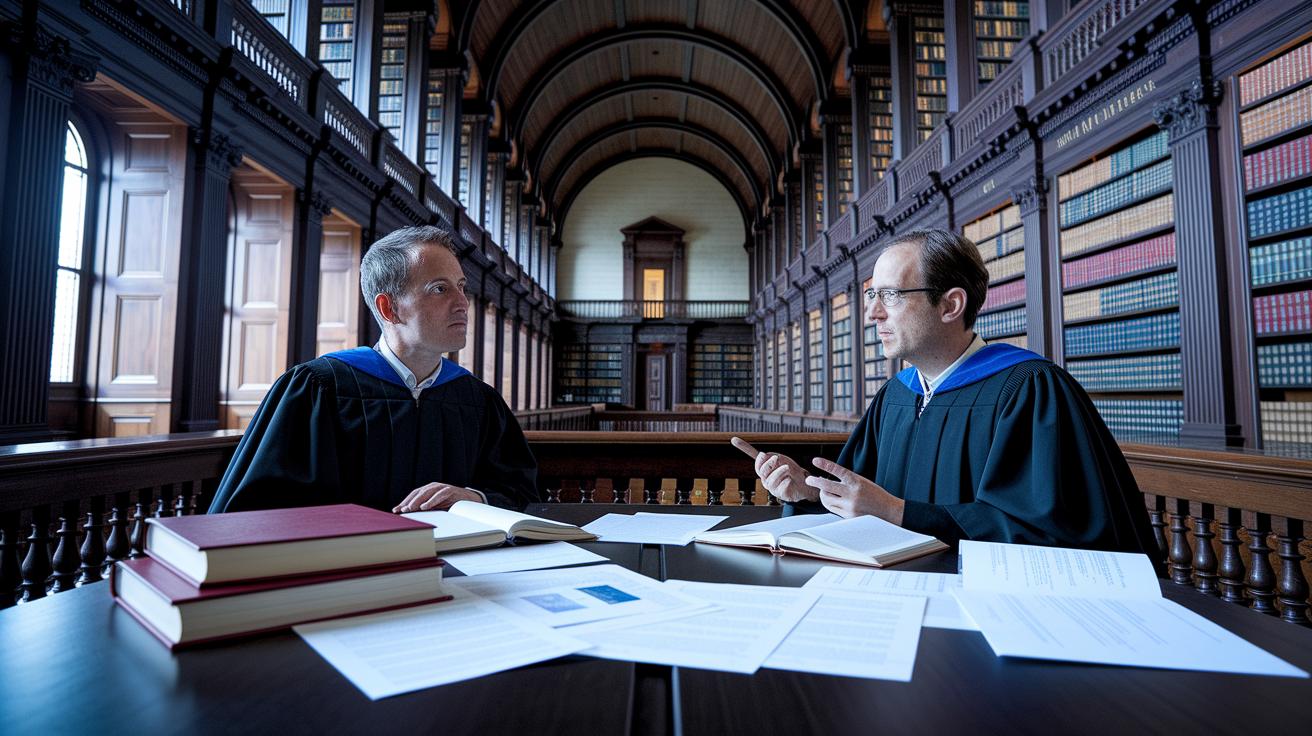
Critical Legal Studies began in the late 1970s at Harvard Law School as a response to strict legal ideas that didn't match real-life situations. Early scholars argued that the old legal rules hid unfair power and gave privileges to the established groups. As time went on, more people supported these ideas. By the mid-1980s, important conferences and publications, including a key meeting in 1983, made it clear that this new way of thinking was here to stay. In the 1990s, experts worked hard to mix these fresh ideas into traditional academic settings. A later film by Jeannie Suk Gersen captured this evolution, featuring influential voices like Mark Tushnet and Kimberle Crenshaw, who helped push for legal reform and deeper questioning of old rules.
| Year | Event | Location | Key Figures |
|---|---|---|---|
| Late 1970s | CLS Begins | Harvard Law School | Early Theorists |
| 1983 | First Major Meeting | Harvard | Founding Organizers |
| Mid-1980s | Key Publications Released | Various U.S. Institutions | Influential Scholars |
| 1990s | Ideas Spread Globally | Worldwide | Mark Tushnet, Kimberle Crenshaw |
Key Theorists and Contributors to Critical Legal Studies
The scholars behind Critical Legal Studies helped us see that the law isn’t always as neutral as it seems. They took a hard look at accepted legal ideas and showed us that hidden biases can shape legal rules. Their work links legal principles to larger political and social forces, sparking ideas for bold reforms.
- Roberto Unger argued that legal texts can be read in many different ways, which means the law can't be strictly neutral.
- Duncan Kennedy pointed out that what looks like equal treatment in legal practices can actually hide deeper social inequalities.
- Mark Tushnet reminded us that legal decisions are often influenced by politics rather than just pure logic.
- Kimberle Crenshaw introduced the idea of intersectionality (how overlapping social identities like race and gender affect legal outcomes) by using stories to show real-life impacts.
- Richard Delgado encouraged the use of storytelling in law to reveal the true experiences of marginalized communities, challenging simple legal narratives.
These thinkers shifted the conversation from the idea of an objective law to a more honest view that takes politics into account. Their fresh perspectives continue to influence how we teach and practice law, pushing us to create a legal system that listens to all voices and works toward true fairness.
Critical Legal Studies Spark Bold Legal Reform

Critical Legal Studies tells us that legal rules aren’t set in stone. Basically, it argues that laws can be read in different ways, so there isn’t just one right answer. Imagine a case where the same rule led to totally different outcomes depending on who was interpreting it. That really shows how flexible these laws can be, and it flips the idea of an impartial legal system on its head.
It also says that law and politics are deeply connected. What happens in the courtroom isn’t just about the facts, it’s also about the judges’ political views and the current social climate. For example, in cases about hot-button social issues, you often see decisions that mirror what’s happening politically. This kind of overlap reminds us that legal interpretations are always influenced by what’s going on outside the courtroom.
Beyond just pointing out problems, Critical Legal Studies pushes for bold changes. It calls for a complete rebuild of our legal institutions so that they work for everyone, not just powerful groups. The movement wants to make the law more democratic by opening up decision-making to more voices. In the end, these ideas aim to create a legal system that’s dynamic, inclusive, and truly responsive to the needs of all communities.
Contrasting Critical Legal Studies with Traditional Legal Theory
Traditional legal theories like formalism, originalism, and textualism see the law as a strict set of rules. They focus on using fixed guidelines or old texts to resolve cases, almost like solving a math problem with one clear answer. Critics say these methods miss how politics and society influence the law. They point out that judges and lawmakers may lean on their own beliefs and the specific details of a case.
| Theory | CLS Perspective |
|---|---|
| Formalism | Shows that legal rules aren’t unchanging, they can hide political biases and hidden interests. |
| Originalism | Argues that the founding texts don’t have one fixed meaning, with context and power playing big roles. |
| Textualism | Says that sticking only to literal words ignores the broader social and political effects of language. |
This clear contrast brings out the fresh approach of Critical Legal Studies (CLS). CLS questions the idea that laws are completely objective and shows that legal decisions are often shaped by personal and political forces. Instead of just taking the written law at face value, it encourages us to consider the larger social and power dynamics at work. In doing so, CLS challenges the old ways of thinking and pushes for a legal system that truly values fairness and equality.
Criticisms and Counterarguments to Critical Legal Studies

Practicality and Application
Some say that Critical Legal Studies (CLS) can feel very abstract. They worry it often shares big ideas without showing clear ways to handle real-life legal problems. Imagine getting a complicated legal theory without any practical steps to put it to work. Without a straightforward plan, these theories risk staying on paper only.
Predictability and Rule of Law
Other critics are concerned that focusing on legal indeterminacy (when laws can be open to various interpretations) shakes the stability we expect from the rule of law. They point out that if the law can be read in many ways, court decisions might become unpredictable. Picture a case where the same rule could lead to different outcomes in similar situations, this leaves everyone uncertain about how the legal system will work.
Power Dynamics vs Rights
Some also argue that by zeroing in on power imbalances, CLS might overlook traditional safeguards for individual rights. They believe that stressing the need to question established power may inadvertently weaken clear rights and responsibilities. In other words, there’s worry that too much focus on challenging power structures could mean missing out on protecting the legal guarantees everyone relies on.
Defenders of CLS respond by saying the approach reveals real inequalities in our legal system. They argue that these insights push us to think about ways to give more people a voice and rebalance power with rights. Despite the criticisms, supporters see CLS as an important tool to spark debate and guide future legal reforms.
Media and Cultural Representations of Critical Legal Studies
Jeannie Suk Gersen’s film "The Influence of Critical Legal Studies" gives us a fascinating look at this movement using carefully selected images of Mark Tushnet and Kimberle Crenshaw. The film drives home important debates and ideas that have helped shape Critical Legal Studies, inviting us to see the law as a lively, ever-changing conversation. It’s kinda like watching a story unfold, where each moment builds on the last to show how legal thought evolves.
- Film: "The Influence of Critical Legal Studies"
- Conference Series: Exeter Critical Legal Conference events
- Multimedia Exhibits: Online galleries and call-for-papers platforms
These visual and academic events help keep the spirit of Critical Legal Studies alive. They make discussions about law feel real and accessible, bridging the gap between high-level theory and everyday life. In doing so, they mix creative storytelling with tough debates, encouraging us to rethink traditional legal ideas. Ever notice how a fresh perspective can change everything? That's the power here, making legal debates not just an academic exercise but a vibrant, ongoing dialogue.
Final Words
In the action, we broke down how legal thought challenges old ideas. We examined key figures and core beliefs, discussed historical roots, and shed light on debates around legal fairness.
Step by step, we explored how new perspectives push us to rethink law.
This article clearly showed the transformative ideas behind critical legal studies.
The discussion leaves us with fresh insights and optimism for new legal approaches.
FAQ
Where can I find downloadable PDFs and notes on Critical Legal Studies?
The downloadable PDFs and notes on Critical Legal Studies offer clear explanations of key concepts, historical milestones, and influential theories, making them useful guides for students and legal enthusiasts.
How does Critical Legal Studies compare to legal realism?
The comparison between Critical Legal Studies and legal realism shows that CLS challenges the neutrality of law by exposing power biases, while legal realism focuses on how law works in practice based on real-world outcomes.
What are examples of Critical Legal Studies theory?
Examples of Critical Legal Studies theory include ideas like the indeterminacy thesis, which argues that legal rules are not fixed but reflect underlying societal power structures and ideological influences.
Who are key Critical Legal Studies scholars?
Key Critical Legal Studies scholars include Roberto Unger, Duncan Kennedy, and Mark Tushnet, whose work critiques traditional legal doctrines and highlights the influence of social and political forces within law.
What is an example of a critical legal theory?
An example of a critical legal theory is the indeterminacy thesis, which argues that legal decisions are shaped by factors beyond strict legal rules, revealing the influence of broader social and power dynamics.
Is legal studies a hard degree?
The idea that legal studies is a hard degree reflects its challenging nature, as it requires critical thinking and in-depth analysis of complex legal texts and theories, though many find the skills gained are highly rewarding.
Should Critical Legal Studies be capitalized?
Critical Legal Studies should be capitalized when referring to the formal academic movement, as it identifies a specific school of thought with distinct concepts and scholarly traditions.