



Have you ever wondered if a DNA test will hold up in court? Legal DNA tests for paternity follow a very clear process that tracks every sample from when it’s collected to when it’s analyzed in the lab. Using a simple cheek swab, this test creates a secure record that can be used for important issues like child support and custody. It follows a step-by-step procedure that yields fast and trusted results. In a legal world where every fact matters, this method gives families clear, legally accepted proof to help resolve disputes with confidence.
Legal DNA Test for Paternity: Court-Admissible Process
A legal DNA test for paternity follows a strict chain of custody protocol (a detailed record that tracks evidence from start to finish) to provide proof that the results can be used in court. Samples are taken using cheek swabs. Each swab is carefully labeled, observed by a witness, sealed, and tracked so there is a clear record from collection to the lab. This detailed process not only makes sure the results are accurate but also creates a trustworthy record that is important for matters like child support or custody hearings. Imagine a trained professional at one of our approved centers collecting a cheek swab calmly and carefully, ensuring the sample is kept secure.
Customers have access to a network of over 3,500 authorized DNA collection sites across all 50 states. These sites include clinics, hospitals, and even mobile units. After placing an order and processing payment, you’ll get a Test Authorization Order within 24 hours during standard business hours. At the collection center, a simple barcode scan confirms the identity of the person giving the sample.
In the lab, each sample is analyzed twice by different teams, with expert oversight to ensure results are more than 99.99% accurate. The testing is done in accredited labs (labs that meet strict quality and safety standards) that also hold AABB accreditation and are backed by organizations like the American Pregnancy Association. You’ll receive your test results securely by email within 1 to 3 business days, and your confidentiality is protected every step of the way. This careful and thorough approach gives you court-approved, legally binding paternity proof for any legal situation.
Legal vs. Non-Legal DNA Test for Paternity

Legal DNA tests for paternity give you solid, court-accepted proof by following a strict process that tracks every sample from collection to lab analysis (this process is called the chain-of-custody). Each cheek swab is taken by a trained professional at a proper site, then securely sealed and documented to keep everything safe. Imagine a certified technician at an approved clinic scanning a barcode on a printed test order, making sure the sample stays untouched from start to finish.
On the flip side, non-legal home DNA tests are just for personal information. They don’t go through the extra legal checks or get the official paperwork needed for court evidence. That means you can’t use these results in child custody cases, support disputes, immigration matters, or to update birth records. Think of it like checking a fact at home, while you see the genetic link, the process isn’t witnessed or officially recorded, so it isn’t valid in court.
Only a court-certified test done under strict chain-of-custody rules meets all the legal requirements, which is why these tests are the trusted choice for any legal matters involving family law and similar issues.
Chain-of-Custody Genetic Examination in Paternity Testing
Our paternity DNA test keeps a digital record that logs every step, from sealing the cheek swab to its arrival at the lab. For example, imagine a certified collector scanning a barcode right after sealing the swab. This digital log works like a locked ledger entry, ensuring every detail is recorded.
Collection centers follow strict state guidelines whether a sample is taken in a clinic or with an at-home kit managed by an authorized agent. In clinics, the record is uploaded immediately, confirming each stage. At home, an agent checks the donor’s identity, seals the sample, and sends the digital log to the lab in real time.
We also use tools like barcode scanning and RF tracking (radio frequency tracking, which tracks the movement of items) to record each hand-off. This step-by-step system helps cut down on human error and deals with small delays or uncertainties during the sample’s journey.
Accredited Laboratories & Court-Quality Genetic Analysis

ReliaLab shines with a digital chain-of-custody system that follows every sample from the moment it’s collected right through to the final report. With over 25 years in the field and millions of tests done, they go far beyond usual duplicate runs. Picture a forensic expert carefully checking digital logs to verify each step, this extra check really sets them apart.
Their work follows strict AABB and CLIA standards, and their expert digital tracking gives everyone extra confidence when evidence is used in legal disputes.
| Feature | Description |
|---|---|
| Digital Tracking | Follows every sample step-by-step to keep the evidence safe. |
| Forensic Expertise | Expert checks by forensic professionals ensure top accuracy. |
Ordering & Sample Collection for a Legal DNA Test for Paternity
Start by ordering your DNA test through our secure online system. Once your payment goes through, you’ll receive a Test Authorization Order by email within 24 hours during business hours. This order confirms your purchase and even lists the nearest approved clinics if you’d prefer to collect your sample at a location. Imagine getting an email that’s like a friendly roadmap, complete with clear instructions and directions to your local center.
If you decide on a clinic visit, be sure to print out your Test Authorization Order and bring it with you. At the clinic, a certified technician will scan the barcode on your form to verify your identity. This step makes sure that every part of the sample collection process is carefully recorded, which is super important for maintaining the legal chain-of-custody (the strict process that shows evidence hasn’t been tampered with).
Prefer collecting your sample at home? No problem. You can use an in-home statutory analysis kit. With this kit, an approved agent will help you collect the sample while following clear, step-by-step instructions. The kit even comes with prepaid envelopes so you can securely send your sample back, ensuring the chain-of-custody stays intact. By following all the steps correctly, your test results become legally binding paternity proof that meets court requirements, balancing ease and legal precision perfectly.
Turnaround Times & Cost-Effective Court Analysis

Legal DNA tests for paternity give you results in just 1–3 business days, sent directly by email. It’s a lot like that quick drug test you might see at work, with results coming in 24–48 hours. Once the sample reaches the lab, they work fast but carefully to make sure everything is right for family law cases.
When you use legal DNA testing, you won’t run into any surprise fees. The cost is clear from the start, based on whether you need a test for one person or a test that also checks the mother’s sample. This simple pricing works well with family law budgets, especially when it comes to court cost-recovery.
Clear pricing and speedy results mean you get a legally binding paternity test fast. Picture getting your results quickly enough to support an urgent court case, all while knowing that your test is both accurate and affordable. Quick and dependable, this service brings together solid analysis with an affordable, timely delivery.
Choosing a Reputable DNA Testing Laboratory for Paternity
When you need a legal DNA test for paternity, start by checking if the lab is accredited. Look for trusted marks like AABB or ISO certification (ISO certification means they meet international quality standards) and review their audit reports. A lab with these credentials not only gives you court-accepted proof but also shows a strong record in handling judicial DNA tests.
Make sure the lab is a designated parent confirmation center by confirming it works with local clinics, hospitals, and mobile units. This connection helps you avoid delays because you can get your sample collected at a nearby court-certified facility.
It’s also important that the lab has expert oversight. When PhD-level experts review the work and test samples twice, you often see accuracy rates of 99.99% or even higher. Checking client reviews and endorsements, like those from the American Pregnancy Association, is a good way to see how the lab performs. Plus, a certified lab will follow strict chain-of-custody rules (a process that tracks every step of the sample) to keep everything documented.
Choosing the right lab not only builds strong evidence for your case but also gives you peace of mind. You can trust that every sample is handled with care to produce clear, accurate results. In short, investing in a reputable lab means you’re getting fast, reliable outcomes that will stand up in court.
FAQs About Legal DNA Test for Paternity
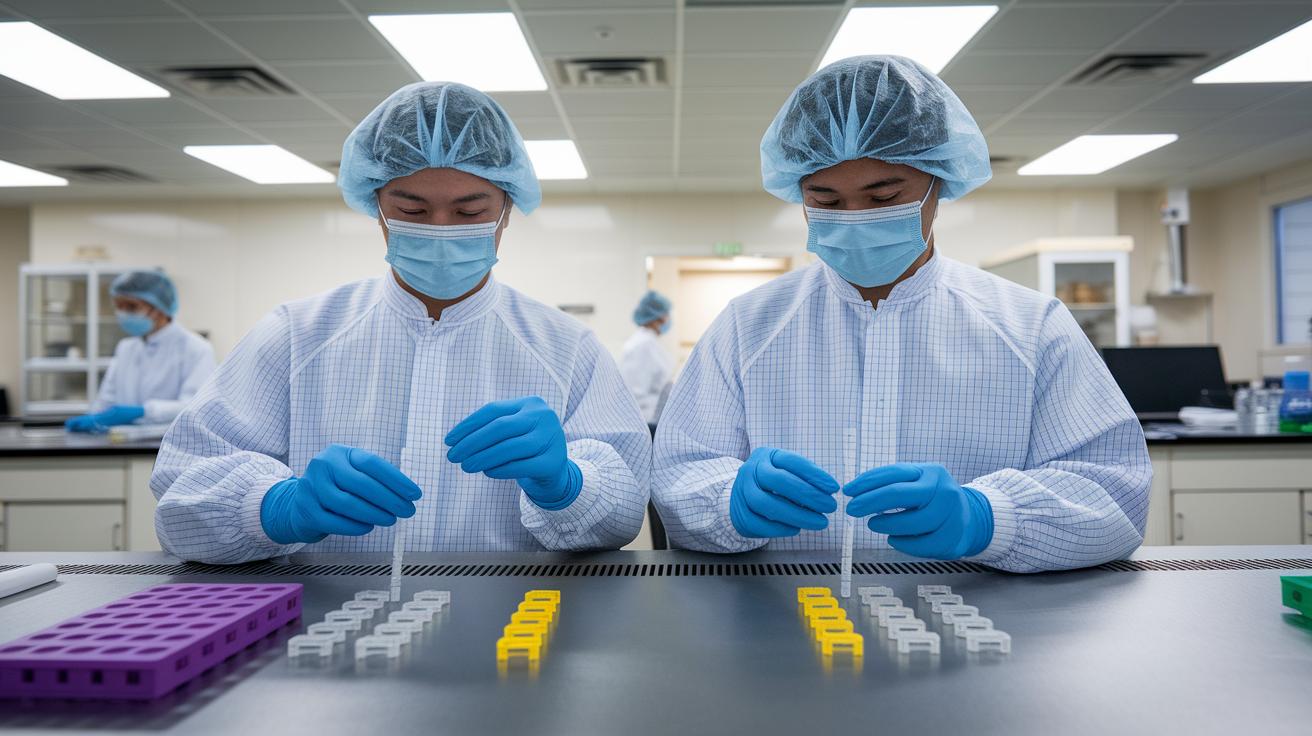
Every step in a legal DNA test is controlled by strict chain-of-custody rules and processed in accredited labs. It’s like a relay race where each handoff is noted carefully.
If you choose a home DNA test, it doesn’t follow the official protocols that a legal test does. Think of it like comparing a printed document with one that’s notarized; only the notarized version is accepted in court.
Once the lab gets your sample, you usually receive your results in one to three business days. This timeline is explained in the ordering and sample collection instructions.
Each sample is tested twice, and experts with advanced credentials review the duplicate results to ensure accuracy over 99.99%. Imagine checking your work twice to be absolutely confident in the outcome.
Only legally certified tests produce results that can be used as court-admissible evidence in child support hearings, immigration cases, and other legal matters. It’s like having an official stamp of approval that confirms every detail.
Final Words
In the action, this blog post laid out how a legal dna test for paternity fits into a court-admissible process. It broke down every step from sample collection to accredited lab review and accurate, secure reporting.
The guide walked through ordering procedures, quick turnaround, and cost clarity, key details you need for legally binding paternity results. Every clear step builds confidence in using lab-tested genetic analysis for informed legal decisions. Stay optimistic and empowered as you move forward.
FAQ
How do I order and locate a legal DNA paternity test online or near me?
Ordering a legal DNA test starts online by choosing an approved service that guides you to authorized collection sites. You receive clear instructions and a barcode to confirm your location and identity.
What is a legal DNA paternity test?
A legal DNA paternity test follows strict chain-of-custody rules, where accredited labs and approved collection centers document each step to verify the sample’s integrity for court use.
How much does a legal DNA paternity test cost and are any free options available?
The cost of a legal DNA test depends on the provider and report type. Free options are not offered since proper chain-of-custody, accredited lab reviews, and legal documentation require fees.
Can a legal DNA paternity test be done with only father and child samples?
A legal test can use only father and child samples, though including the mother can improve statistical certainty. All sample collections must follow documented protocols.
Is it illegal to get a paternity test without the mother’s consent?
Obtaining a legal paternity test without the mother’s consent usually violates chain-of-custody rules required by law, making the results inadmissible in court and possibly illegal.
How can I tell if my son is mine without a DNA test?
Without a DNA test, paternity cannot be confirmed with certainty. Only a legally conducted DNA test gives you a reliable, court-admissible result.