


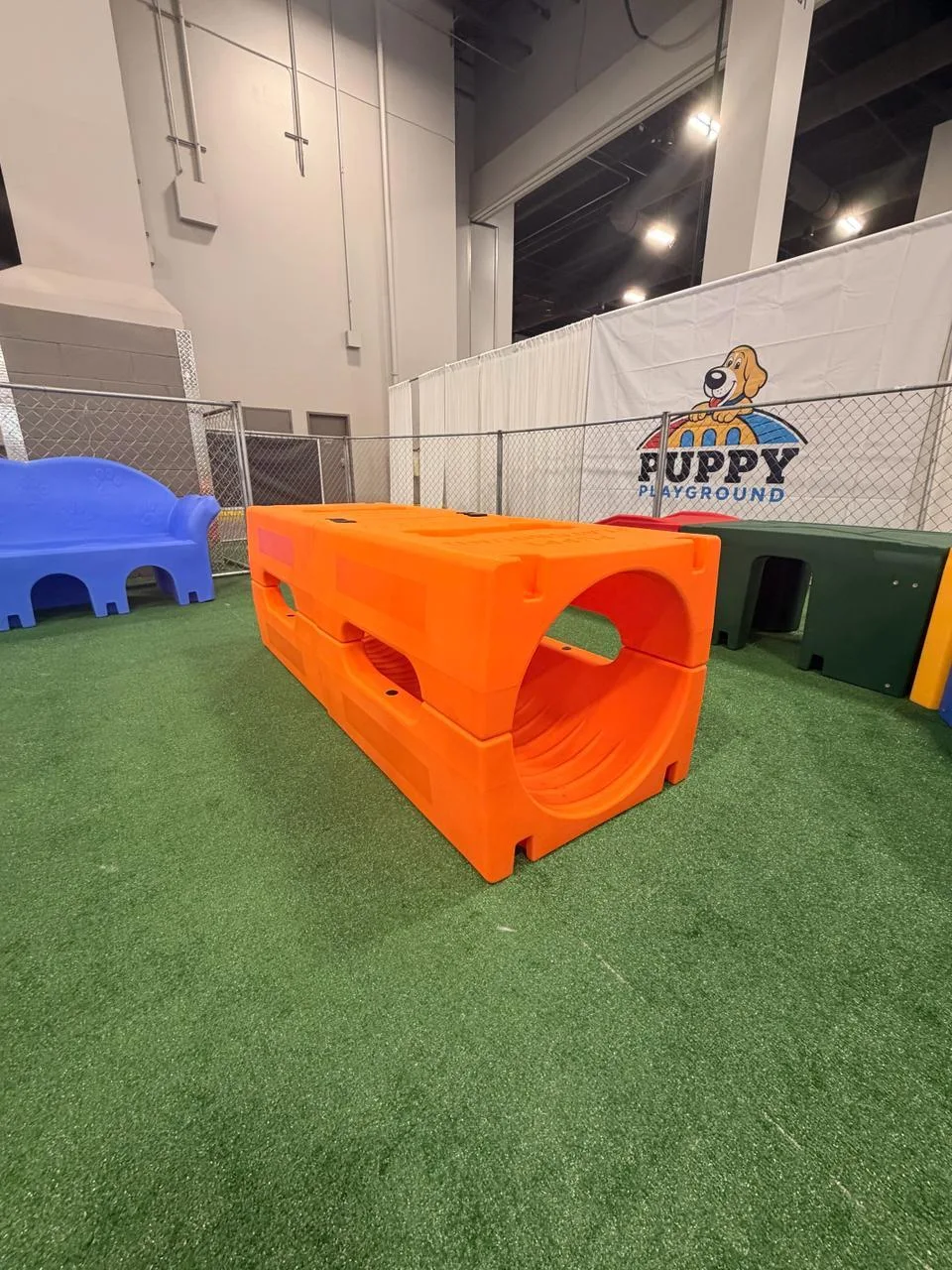
Dogs need more than open floor space to stay mentally and physically engaged. In daycare, boarding, veterinary, shelter, and other professional environments, thoughtfully selected dog play equipment can encourage movement, exploration, confidence, and social interaction. The goal is not simply to fill a play yard with objects. Equipment should support safe, purposeful activity for dogs of different sizes, ages, and abilities.
Puppy Playground develops commercial dog play equipment and accessories for facilities that want to create more engaging play environments. Understanding how equipment contributes to enrichment can help operators plan spaces that are both fun and functional.
Physical Exercise Through Varied Movement
Dogs naturally benefit from opportunities to walk, run, climb, step, turn, and change elevation. A completely flat play area may allow running, but equipment can introduce additional types of movement.
Low platforms, ramps, steps, tunnels, and other structures can encourage dogs to use different muscle groups and practice coordination. For active dogs, these features can make play more interesting. For facilities, equipment also creates destinations within the yard and can help distribute activity across the space.
Mental Enrichment Matters Too
Enrichment is not only about tiring dogs physically. Dogs also benefit from novelty, problem-solving, exploration, and sensory experiences. A tunnel invites a dog to investigate an enclosed space. A raised platform creates a new viewpoint. Modular equipment can be rearranged to make the environment feel different over time.
These small challenges can help keep play areas interesting, especially for dogs that attend daycare regularly. Facilities can combine equipment with supervised games, scent activities, training exercises, and rest periods to create a more balanced day.
Equipment Can Support Confidence
Some dogs immediately climb onto a platform or run through a tunnel. Others may approach cautiously. With appropriate supervision and positive encouragement, equipment can provide opportunities for dogs to build confidence at their own pace.
The key is never to force a dog onto equipment. Staff can use treats, toys, praise, or modeling to invite exploration. A dog that learns to step onto a low surface or move through a tunnel may gain confidence that carries into other activities.
Choose Durable Equipment for Commercial Use
A professional dog facility places different demands on equipment than a backyard. Multiple dogs may use the same structure every day, and surfaces need to withstand repeated cleaning, scratching, jumping, and weather exposure when installed outdoors.
Commercial operators should consider durability, stability, ease of sanitation, material safety, and whether the equipment has edges or openings that could create unnecessary risk. Products should also be appropriate for the size and play style of the dogs using the area.
Plan for Safe Traffic Flow
Placement is just as important as the equipment itself. Structures should not create blind corners where dogs or staff cannot see interactions. There should be enough space around equipment for dogs to enter and exit without becoming trapped by a group.
Facilities can use equipment to create zones for active play, exploration, or quieter observation. Staff should be able to move easily through the space and reach dogs quickly when needed.
Think About Different Dog Populations
Not every playgroup needs the same setup. Small dogs may benefit from lower equipment and appropriately scaled openings. Large, athletic dogs may use wider ramps and more substantial structures. Senior dogs or rehabilitation patients may require controlled, low-impact options rather than high-energy obstacles.
Facilities that serve multiple populations can use modular equipment to adapt the environment. Changing the layout can also provide novelty without requiring an entirely new play yard.
Maintenance and Cleaning Should Be Simple
Dog play equipment should be inspected regularly for wear, loose components, damage, or surfaces that have become difficult to clean. A maintenance routine helps facilities identify small issues before they become larger problems.
Cleaning protocols should match the material and manufacturer recommendations. Equipment that is easy to move or access from multiple sides can simplify sanitation in busy facilities.
Create a More Engaging Play Environment
Well-planned dog exercise equipment can add structure to a play space and provide opportunities for physical activity, mental enrichment, and confidence building. The best setup considers the dogs using the area, the staff supervising them, and the operational realities of a commercial facility.
Puppy Playground offers dog play equipment and accessories designed for professional environments. By selecting durable equipment and placing it thoughtfully, facilities can create play areas that encourage healthy activity while supporting safe supervision.
Use Equipment as Part of a Broader Enrichment Program
Play structures are most effective when staff use them intentionally rather than treating them as permanent scenery. A platform can become part of a simple training exercise, a tunnel can support recall games, and a series of low obstacles can encourage controlled movement. Rotating activities gives dogs new reasons to interact with familiar equipment and can help staff tailor enrichment to different playgroups.
Observation is important when introducing a new layout. Staff can watch which features dogs use naturally, which areas become congested, and whether particular structures encourage healthy movement or create unnecessary competition. Equipment can then be repositioned or removed based on how dogs actually behave in the space. This is one advantage of modular systems: the environment can evolve as the facility learns what works best for its population.
Facilities should also consider the experience of pet owners. An attractive, thoughtfully organized play area can demonstrate that enrichment is part of the care program, but appearance should never come at the expense of function. Equipment should be selected because it supports safe activity, sanitation, supervision, and the needs of the dogs. When those priorities guide the design, a play yard can become a more useful part of the facility’s daily operations and a meaningful component of the dogs’ overall experience.